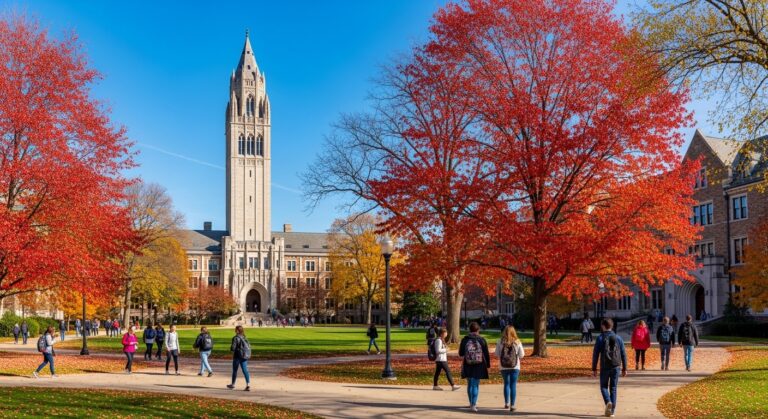

【EMORY UNIVERSITY】The Ultimate Parent’s Guide to Admissions & Financial Aid
By Andy Lee | Elite Prep Suwanee | April 2, 2026
“Could my child actually get into Emory?” — This is one of the most common questions I hear from families who walk through my door. And today, after reading this guide, the way you think about Emory will change completely.
Emory University is no longer the school people think of as “reachable with enough effort.” For the Class of 2029, the overall acceptance rate stands at approximately 10.3% — less than half of what it was just a decade ago, when the rate hovered in the mid-20s. Out of more than 30,000 applicants each year, only about 3,500 receive an offer of admission. While Early Decision I (ED I) does offer a relative advantage, even that pathway is fiercely competitive.
Then in September 2025, Emory made two landmark announcements simultaneously. The first was the launch of “Emory Advantage Plus” — a groundbreaking financial aid policy that eliminates tuition for all students from families earning $200,000 or less per year, beginning in Fall 2026. The second was a shift that understandably gave many families pause: Emory transitioned from need-blind to need-aware admissions, meaning that a student’s financial circumstances may now be factored into the admission decision for applicants requiring financial aid.
For families considering Emory, both of these developments are essential to understand. For some households, they represent a remarkable opportunity. For others, they introduce strategic variables that require careful planning.
I have spent more than 30 years working in U.S. college admissions, guiding countless students through the application process and celebrating their acceptances. Emory holds a special place in my experience — I have watched firsthand, year by year, as this institution quietly but decisively claimed its place among the most selective universities in the country. Today, drawing on three decades of expertise and the most current data available, I am sharing everything you need to know to give your child the strongest possible chance of admission to Emory.
1. Inside Emory’s Admission Process: What Really Matters
What Emory Evaluates Most Highly
A careful analysis of Emory’s Common Data Set makes one thing clear: this institution conducts a genuinely holistic review — and does so with rigor. The following criteria are classified as “Very Important” in Emory’s evaluation:
- Rigor of Secondary School Record
- Emory begins by asking: Did this student challenge themselves? AP, IB, and Honors courses — taken consistently and with strong grades — are the foundation of a competitive application.
- Grade Point Average (GPA)
- 84% of admitted students ranked in the top 10% of their high school class.
- Letters of Recommendation
- Emory treats recommendations not as a formality, but as a meaningful window into who an applicant truly is.
- Extracurricular Activities and Talent/Ability
- Notably, both of these categories appear simultaneously as “Very Important” — a defining feature of Emory’s evaluation framework.
- Character and Personal Qualities
- Emory’s institutional mission — service to humanity — is directly reflected in how it weighs this criterion.
The following are rated as “Important”:
- Essays
- Standardized Test Scores
- Volunteer Work (listed as a distinct criterion)
It is worth noting that standardized test scores are ranked “Important” rather than “Very Important,” and that Volunteer Work appears as its own separate category — a meaningful signal about what Emory values in its students.
The Profile of an Admitted Emory Student
Over 30 years of observation, certain patterns emerge clearly among students who gain admission to Emory.
Academic profile of admitted students:
- Middle 50% SAT range: 1480–1540 (median: 1510)
- Middle 50% ACT range: 32–35
- Average unweighted GPA: 3.84
- 98% of admitted students ranked in the top 25% of their high school class
But these numbers are necessary conditions, not sufficient ones. What I have observed in admitted Emory students goes well beyond the transcript:
- Depth of Commitment: Depth over breadth:
- Emory is not looking for a mile-wide, inch-deep activity list. It is looking for students with a genuine story — a clear thread of passion and purpose that runs through their application.
- A Service Orientation:
- Emory’s educational philosophy is built on service to humanity. This should be reflected authentically throughout the entire application — not as a checkbox, but as a genuine orientation.
- A Fit with Atlanta:
- Students who demonstrate a concrete vision for how they will engage with Atlanta — home to the CDC, Coca-Cola, a thriving film industry, and the living history of the Civil Rights Movement — leave a lasting impression.
Common Misconceptions Among Korean-American Families
“My child only needs Biology and Chemistry AP courses because Emory is a pre-med school.”
- This is a misconception. Emory is a comprehensive research university that places great emphasis on a Liberal Arts education. It seeks students who demonstrate strength across the humanities, social sciences, economics, business, and computer science — not just the sciences. While a high proportion of students do pursue pre-med pathways, admission is evaluated holistically, regardless of intended major.
“An SAT score of 1550 should be a safe score.”
- Not at a 10% acceptance rate. Even near-perfect scores offer no guarantee. Numbers open the door; your story is what gets you into the room.
“Emory favors Georgia students.”
- Partially true — but primarily in financial terms. As a private university, Emory does not maintain the strong in-state preference typical of flagship public universities. However, Georgia residents can stack HOPE/Zell Miller scholarships on top of Emory’s institutional aid, creating a meaningful financial advantage.
“It doesn’t matter whether I choose Oxford College or the Main Campus.”
- There are real differences. Oxford College is a two-year Liberal Arts campus located 38 miles from the main campus in a small-town setting. Students transfer to the main campus as juniors and receive the same Emory degree, but the first two years of the experience are quite different. Oxford’s acceptance rate is somewhat higher, and it is an excellent option for students who prefer a close-knit community environment.
“Only domestic students can receive financial aid.”
- Partially true. Emory meets 100% of demonstrated financial need for domestic students. For international students — including Korean nationals — only a limited number of need-based aid awards are available, and the competition is far more intense. International students seeking financial aid must apply in the Regular Decision round; financial aid is not available to international students under the ED process.
2. SAT, GPA, and AP Strategy
Target Score Range
Emory has maintained its test-optional policy through the 2025–26 application cycle and has announced it will remain test-optional for 2026–27 as well. However, “test-optional” does not mean “test unimportant.”
Here are my recommended benchmarks:
- SAT 1500+: Submit your scores.
- SAT 1520+: Competitive.
- SAT 1540+: Strong positioning.
- ACT 33+: Aim for this floor; 34–35 is excellent.
If your score falls below 1480, consider exercising the test-optional option — but only if you can compensate with exceptional GPA, course rigor, activities, and essays. When numbers cannot speak for you, your story must.
Important: Emory applies SAT superscoring — combining your highest section scores across multiple test dates. This allows for a targeted, section-by-section preparation strategy.
GPA Strategy
Emory evaluates both unweighted GPA and course rigor in tandem. Maintaining a 3.8 or above on a 4.0 scale while taking the most challenging courses available at your school is the ideal combination.
Key guidance: Selecting easier courses to protect GPA is counterproductive. Emory’s admissions officers review each high school’s School Profile and know exactly what courses are offered. If AP Calculus BC is available at your school and a student has only enrolled in regular Calculus, that discrepancy is immediately apparent. The most powerful combination is earning an A in the most rigorous course available.
If forced to choose: it is generally preferable to take the most demanding courses and earn a B+ than to pad GPA with easier coursework. That said, this decision depends on each student’s individual circumstances and should be made thoughtfully with guidance from a professional counselor.
AP, Honors, and Dual Enrollment Course Selection
Core courses that demonstrate college-level academic readiness:
- AP English Language & Composition
- AP English Literature & Composition
- AP Calculus AB/BC
- AP Chemistry or AP Biology
- AP U.S. History or AP World History
Differentiating courses that signal intellectual curiosity:
- AP Research and AP Seminar (AP Capstone Program)
- AP Computer Science A or AP Computer Science Principles
- AP Psychology, AP Environmental Science, AP Statistics
Courses particularly aligned with Emory’s global and multicultural emphasis:
- AP Spanish Language, AP Chinese Language
- AP Comparative Government and Politics
A competitive course load for Emory includes approximately 8 to 12 AP courses over four years of high school. The number matters less than the coherence — how your course choices connect to your interests and intended field of study.
Dual Enrollment (concurrent enrollment in college courses) is an excellent alternative where AP offerings are limited. Emory explicitly acknowledges that it evaluates students within the context of their available opportunities, so the goal is to demonstrate the highest level of challenge your school makes possible.
Timing Your Test Preparation
A recommended preparation timeline:
- Sophomore Spring: Begin structured PSAT preparation.
- Junior Fall (October): Sit for the PSAT/NMSQT. Achieving National Merit Semifinalist status carries positive weight in the Emory process.
- Junior Spring (March or May): Take the SAT for the first time.
- Summer–Fall of Senior Year (August or October): Retake if needed. Given Emory’s ED I deadline of November 1, the October SAT represents the final opportunity to submit new scores under Early Decision.
A word of caution: Do not become so consumed with test preparation that other elements of your application suffer. Emory conducts holistic review. Meaningful activities and demonstrated leadership must accompany strong academic credentials. A balanced approach — roughly one hour of daily SAT preparation alongside sustained investment in academics and activities — yields the best overall outcomes.
3. A Year-by-Year Preparation Roadmap
Middle School (Grades 6–8): Building the Foundation
“Is middle school really too early to start thinking about Emory?” — If Emory is your target, the answer is no. These years are a critical window for building the habits and skills that will define your high school application.
- Academics:
- Aim to complete Algebra I by 8th grade, enabling entry into an Honors/AP mathematics track in high school.
- Begin a second language — Spanish, French, or Mandarin — as Emory places significant value on global awareness. For Korean-heritage students, native Korean fluency is already a meaningful asset.
- Reading:
- Strong reading comprehension is the foundation of SAT performance and quality writing. Build a consistent reading habit across a variety of genres. Humanistic thinking — which Emory deeply values — begins with serious reading.
- Activity Exploration:
- Middle school is the time to explore — science, arts, athletics, service, coding. Cast a wide net and begin discovering genuine areas of passion. Plant the seeds of community service, which Emory weighs heavily.
- Habits:
- Time management, self-directed study, and organizational skills developed in middle school will pay enormous dividends in high school.
9th Grade: Setting the Right Foundation
9th grade grades count toward your GPA. There is no grace period. Strong performance from the very first semester is essential.
- Academics: Enroll in Honors English, Honors Mathematics (Honors Geometry or Algebra II), and Honors Science (Biology). Maintain strong grades in World History or Geography.
- Foreign Language: Emory is deeply committed to global community. Completing at minimum three to four years of a foreign language is strongly recommended. Korean-heritage students should consider setting a goal of sitting for AP Korean Language — your heritage language is a genuine differentiator.
- Activities: Begin committing to two or three activities and showing meaningful engagement. Join clubs and begin building a community service record — the foundation Emory will look for.
- Standardized Testing: Formal SAT preparation is premature at this stage. Focus instead on building reading stamina and vocabulary — the most effective indirect preparation.
10th Grade: A Critical Inflection Point
10th grade is what I call the “strategic fork in the road.” The decisions made this year set the trajectory for everything that follows in 11th and 12th grade.
- Academics: Begin one or two AP courses. Strong initial choices include AP World History, AP Biology, AP Chemistry, or AP English Language. Continue Honors Mathematics and Science.
- Testing: Sit for the October PSAT. Use your results to identify weak areas and begin addressing them systematically.
- Activities: Conclude the exploratory phase and begin investing deeply in two or three core activities. Seek out activities that allow you to demonstrate the service ethic and global perspective Emory values. Explore summer programs and research opportunities. Visit Emory’s campus or attend a virtual session to begin building demonstrated interest.
- Leadership: Begin assuming mid-level leadership roles — vice president, project lead, committee chair — within your current commitments.
11th Grade: The Year That Defines Everything
To speak plainly: junior year is the hardest year and the most consequential. I do not overstate when I say that 11th grade determines approximately 80% of your college application.
- Academics: Take three to five AP courses. Ideal selections include AP Calculus BC, AP English Literature or Language, AP U.S. History, an AP Science (Chemistry, Physics, or Biology), and one or two APs aligned with your area of interest. First-semester grades carry particular weight.
- Testing: Sit for the SAT in March or May. If you do not reach your target, use the summer for intensive preparation and retake in August. Aim for a score of 4 or higher on all AP exams in May.
- Activities: Secure a top leadership position in your primary activity — club president, team captain, program founder. Document your community service impact with precision: hours contributed, programs established, and number of individuals served.
- Application Preparation: Begin reviewing Emory’s two supplemental essay prompts for the 2025–26 cycle: (1) an academic interest exploration of approximately 200 words, and (2) a 150-word response chosen from among four provided options. Begin essay brainstorming in the spring of junior year. Plan a campus visit and identify the two teachers you will ask for letters of recommendation.
12th Grade: Execution
12th grade is the year of execution. Rather than starting something new, the focus should be on presenting everything you have built in the most compelling form possible.
- Emory ED I Application: Emory offers both Early Decision I and Early Decision II. The ED I deadline is November 1. ED I acceptance rates are meaningfully higher than Regular Decision rates. If Emory is your first-choice school, I strongly recommend applying ED I — but only after carefully reviewing the Net Price Calculator and understanding your likely financial aid package. ED is a binding commitment.
- ED II and RD: The ED II and Regular Decision deadlines are both January 1. These are appropriate pathways if ED I did not yield the desired outcome or if Emory is not your first choice.
- Essays: Complete the Common Application personal statement plus Emory’s two supplemental essays. Though relatively brief — 200 words and 150 words — every word carries weight. The essays must convey why Emory specifically, and how you intend to contribute to its community.
- Academic Performance: Continue taking your most challenging courses without relenting. “Senior Slump” is not an option. Emory reviews final transcripts, and a significant grade decline can result in rescission of an offer.
4. Real Student Case Studies
Case Study 1 — How Story Outperformed Stats: Student K
Student K began working with me in 10th grade. When we first met, her profile showed an SAT of 1490 and an unweighted GPA of 3.88 — solidly within Emory’s admitted range, but unremarkable. Her activity list was long but lacked depth: student council member, volunteer club participant, orchestra. A textbook resume-building pattern.
Working together, we excavated what she genuinely cared about. It emerged that she had a deep passion for destigmatizing mental health — particularly within the Korean-American community, where discussing mental health is often treated as taboo. We restructured her entire activity profile around this authentic core. She founded a Mental Health Awareness Club at her school, partnered with a local Korean community center to organize mental health seminars, and independently created and distributed a Korean-language mental health resource guide.
Through focused preparation, her SAT reached 1530. Her personal essay told the story of a student who, once paralyzed by the pressure to appear perfect, ultimately chose to share her own vulnerability — and in doing so, became a catalyst for change in her community. This was precisely what Emory means by “service to humanity.”
Result: Admitted via Early Decision I. Student K’s journey is a powerful demonstration that depth of story outweighs breadth of activities — and that authenticity resonates far more deeply than credentials alone.
Case Study 2 — The Power of a Strategic Rewrite: Student P
Student P’s profile looked extraordinary on paper: SAT 1560, unweighted GPA 4.0, 12 AP courses. He came to me in the spring of his junior year, after having applied to Emory ED I and been deferred to Regular Decision.
The diagnosis was clear: impeccable numbers, but no narrative. His personal statement was a chronicle of achievements — a recitation of what was already listed elsewhere in the application. His supplemental essays were filled with generic praise of Emory. There was no answer to the questions that matter most to this institution: “Why Emory, specifically?” and “How will you contribute to this community?”
For Regular Decision, we rebuilt his essays from scratch. His revised application incorporated vivid, specific memories from his actual campus visit, a concrete research plan leveraging the CDC’s proximity, and ideas for engagement with the Emory Global Health Institute. His supplemental essay connected a philosophy he had developed through peer mentoring — that teaching is itself a form of learning — directly to Emory’s service mission.
Result: Admitted in Regular Decision. Student P’s case illustrates that numbers alone are insufficient, and that genuine understanding of institutional fit can make the difference.
Case Study 3 — Financial Strategy in Action: Family L
Family L had a household income of approximately $130,000 per year. When we first spoke, they were prepared to rule out Emory entirely. “We probably won’t qualify for much financial aid,” the parents told me.
Looking more closely, the picture was entirely different. Their daughter was an outstanding student. The incoming Emory Advantage Plus program would eliminate tuition for families earning up to $200,000. By working meticulously through the CSS Profile — accurately documenting significant medical expenses and the concurrent educational costs of two children in school — the family was able to present their financial circumstances in full and accurate detail. They elected to apply Regular Decision in order to compare financial aid packages before committing.
Result: Admitted Regular Decision with a financial aid package equivalent to full tuition. The assumption that “our income is too high for aid” is one of the most common — and costly — misconceptions I encounter. At Emory, it simply is not true for families in this income range.
5. Financial Aid and Scholarship Strategy
Emory’s financial aid landscape underwent historic changes in 2025. Understanding these changes with precision is essential for any family serious about Emory.
The Shift to Need-Aware Admissions (Fall 2025)
In September 2025, Emory ended the need-blind admissions policy it had maintained since 1998 and transitioned to a need-aware model. This means that for some applicants requiring financial assistance, financial circumstances may now be considered as part of the admission decision.
However, this change is not uniformly disadvantageous to students with financial need. Emory simultaneously announced the Emory Advantage Plus program, which will eliminate tuition for all domestic students from families earning $200,000 or less beginning in Fall 2026. For middle- and lower-income families, this actually represents a significant expansion of access.
Note for international students (including Korean nationals): Emory has historically applied need-aware criteria to international applicants and provides only a limited number of need-based awards. International students seeking financial aid must apply in the Regular Decision round — financial aid is not available to international applicants in the ED process.
100% Need Met | No-Loan Policy (Domestic Students)
For all admitted domestic students, Emory meets 100% of demonstrated financial need. Through its Emory Advantage program, financial aid packages are structured entirely from grants and work-study — no need-based loans. This is a distinction shared by only a handful of universities in the United States.
Beginning Fall 2026, Emory Advantage Plus extends this commitment further: all domestic students from families earning $200,000 or less will receive full tuition coverage — a value exceeding $60,000 per year. Currently, approximately 40% of Emory undergraduates receive Emory Advantage support; that proportion is expected to grow substantially.
Required Financial Aid Documents
- FAFSA (Free Application for Federal Student Aid) — Emory School Code: 001564
- CSS Profile — Emory School Code: 5187
- The CSS Profile collects significantly more detailed financial information than the FAFSA and forms the basis for institutional (non-federal) aid. If parents are divorced, each parent must submit a separate CSS Profile.
Filing Deadlines:
- ED I applicants: Submit financial aid materials simultaneously with your application.
- RD applicants: Priority deadline is February 15; absolute deadline is March 1.
Financial Aid Strategy by Income Level
- Household income under $75,000: Tuition is expected to be covered almost entirely through grant aid. Post-Emory Advantage Plus, the net cost is anticipated to be very low.
- Household income $75,000–$150,000: Substantial need-based aid is available. The CSS Profile’s detailed asset disclosures are particularly important in this range.
- Household income $150,000–$200,000: Within the Emory Advantage Plus threshold — full tuition coverage is available. Submit both FAFSA and CSS Profile without fail.
- Household income $200,000–$250,000: Need-based aid decreases, but families with multiple children in college simultaneously or other exceptional circumstances may still receive meaningful support.
- Household income above $250,000: Need-based aid is unlikely in most cases, but significant medical costs or other special circumstances can affect the calculation. Always apply and let the process determine the outcome.
Mistakes Korean-American Families Frequently Make
- Filing only the FAFSA and skipping the CSS Profile — this eliminates eligibility for all institutional grants.
- Committing to ED without modeling the financial aid package — ED is binding. Use the Net Price Calculator before signing any commitment.
- Failing to report Korean assets — real estate and financial holdings in Korea must be disclosed on the CSS Profile. Omitting them creates legal and ethical risk.
- Missing financial aid deadlines — admission application and financial aid deadlines are separate. Both must be tracked and met.
6. Application Checklist
Junior Year Essentials
- Enroll in three to five AP courses and maintain A-level performance.
- Sit for the SAT or ACT in March or May.
- Secure a top leadership position in your primary activity.
- Participate in a summer program, internship, or research project.
- Visit Emory’s campus or attend a virtual Eagle Chat session to build demonstrated interest.
- Identify and approach two teachers for letters of recommendation.
- Complete a first draft of your college list (Reach, Match, and Safety schools).
- Begin essay brainstorming before the summer.
- Draft your Activity List.
- Run the Net Price Calculator to model your expected financial aid award.
Senior Year Essentials
- September: Create your Common Application account and complete the basic profile.
- September–October: Draft and refine both Emory supplemental essays through multiple revision cycles.
- October 1: Begin the FAFSA and CSS Profile.
- October: Sit for the SAT/ACT if a final attempt is needed.
- November 1: Submit your Emory ED I application.
- December: Review ED I results; finalize essays for ED II or RD schools if needed.
- January 1: Submit Emory ED II or RD application.
- February 15: Priority filing deadline for CSS Profile and FAFSA.
Additional application components to note:
- Letters of Recommendation: A minimum of two — ideally one from a Humanities/English teacher and one from a Math or Science teacher.
- Activity List: Strategically organize your 10 activities in order of impact and depth.
- Interviews: Emory does not offer formal alumni interviews — your essays and supplemental responses must carry the full weight of your self-presentation.
- Arts Portfolio: If applying to arts or music programs, review specific departmental requirements.
7. Practical Guidance and Honest Advice
Mistakes Students and Families Commonly Make
- Mistake 1: Prioritizing breadth over depth in activities.
- A list of ten loosely affiliated activities is far less effective than two or three in which a student has achieved meaningful outcomes. Emory has no interest in the “mile wide, inch deep” resume.
- Mistake 2: Writing the personal essay like a resumé.
- An essay that simply recounts grades and awards is redundant — that information already exists in the application. The essay is the one space where you answer the question: “Who are you, beyond what the numbers say?”
- Mistake 3: Writing generic supplemental essays.
- Saying “Emory has an excellent pre-med track record” in a “Why Emory?” essay is not an answer — it is a placeholder. Emory expects specificity: name a professor whose research excites you, describe a program you intend to pursue, explain how you will engage with Atlanta as a resource.
- Mistake 4: Underestimating the financial risk of Early Decision.
- ED is a binding agreement. You are committing to attend before you have seen your financial aid award. Use the Net Price Calculator in advance. Know your numbers before signing.
- Mistake 5: Viewing Oxford College as a backup plan.
- Oxford College is a rigorous Liberal Arts campus that offers a deeply intimate, faculty-centered educational experience. For the right student, it is not a consolation — it is the best fit. Its somewhat higher acceptance rate can also be used as a strategic advantage.
Advice for Students Starting Later
“It’s already junior year — is it too late?” The honest answer: late is not impossible. Students starting junior year should concentrate on the following:
- Make first-semester junior year grades as strong as possible. A demonstrated upward trend in recent performance carries real weight.
- Secure leadership roles within existing activities rather than starting new ones from scratch.
- Use the summer fully: intensive SAT preparation, a meaningful project, and early essay drafts — all running in parallel.
- Allow the essay to tell a story of growth and awakening. The experience of discovering direction late can itself become a compelling narrative.
The Parent’s Role
After 30 years, the most effective parent I have encountered operates as a supporter, not a manager.
What works:
- Preparing financial documents in advance and tracking application deadlines together.
- Providing emotional support during what is genuinely a stressful process.
- Accompanying your student on campus visits while allowing them space to observe and form their own impressions.
What to avoid:
- Writing or heavily editing your student’s essays. Admissions officers recognize parent-authored writing with remarkable consistency.
- Selecting or mandating your student’s activities.
- Framing the process in terms of what other families’ children have done.
Balancing Professional Guidance with Student Ownership
Professional support — test preparation, counseling, strategic advising — is a tool. It is not the answer. An SAT program can improve a score; it cannot manufacture genuine passion or authentic voice. The ideal model is as follows:
- Standardized testing: Seek expert coaching.
- Activities: Student-led in conception and execution.
- Essays: Professional guidance in the brainstorming phase; every word written in the student’s own voice.
- Overall strategy: Designed with an experienced counselor, but driven by the student at every step.
8. Closing Thoughts: The Journey to Emory Begins Today
If you have read this far and found yourself thinking, “Is Emory too far out of reach for my child?” — I want to leave you with one thought.
A 10% acceptance rate is daunting. But the students who are inside that 10% all began with the same uncertainty you are feeling now. What separated them was not innate brilliance — it was sustained, strategic preparation moving in the right direction.
Emory is not looking for students who simply study hard. It is looking for students who combine academic excellence with a genuine commitment to serving humanity, a global perspective, and a readiness to grow within one of America’s most dynamic cities. The launch of Emory Advantage Plus — which eliminates tuition for families earning under $200,000 — means that if financial concerns have kept Emory off your list, now is the time to reconsider.
Above all, the earlier you begin, the better your results will be. Middle school is ideal. 9th or 10th grade still offers ample runway. Even 11th grade is not a reason to give up. At every stage, what is needed is an accurate strategy tailored to where your child actually stands.
In more than 30 years of working in this field, I have seen one truth consistently confirmed: preparation benefits from an early start, and precise strategy produces better outcomes than effort alone.
Are you ready to begin building the road to Emory? The most effective first step is designing a personalized roadmap with an experienced professional — one that takes into account exactly where your child is today, and where they need to be.
Thank you.
Andy Lee
Director | Elite Prep Suwanee (powered by Elite Open School)
1291 Old Peachtree Rd. NW #127
Suwanee, GA 30024
Email: andy.lee@eliteprep.com
Website: www.eliteprep.com/suwanee
Tel & Text: 470.253.1004