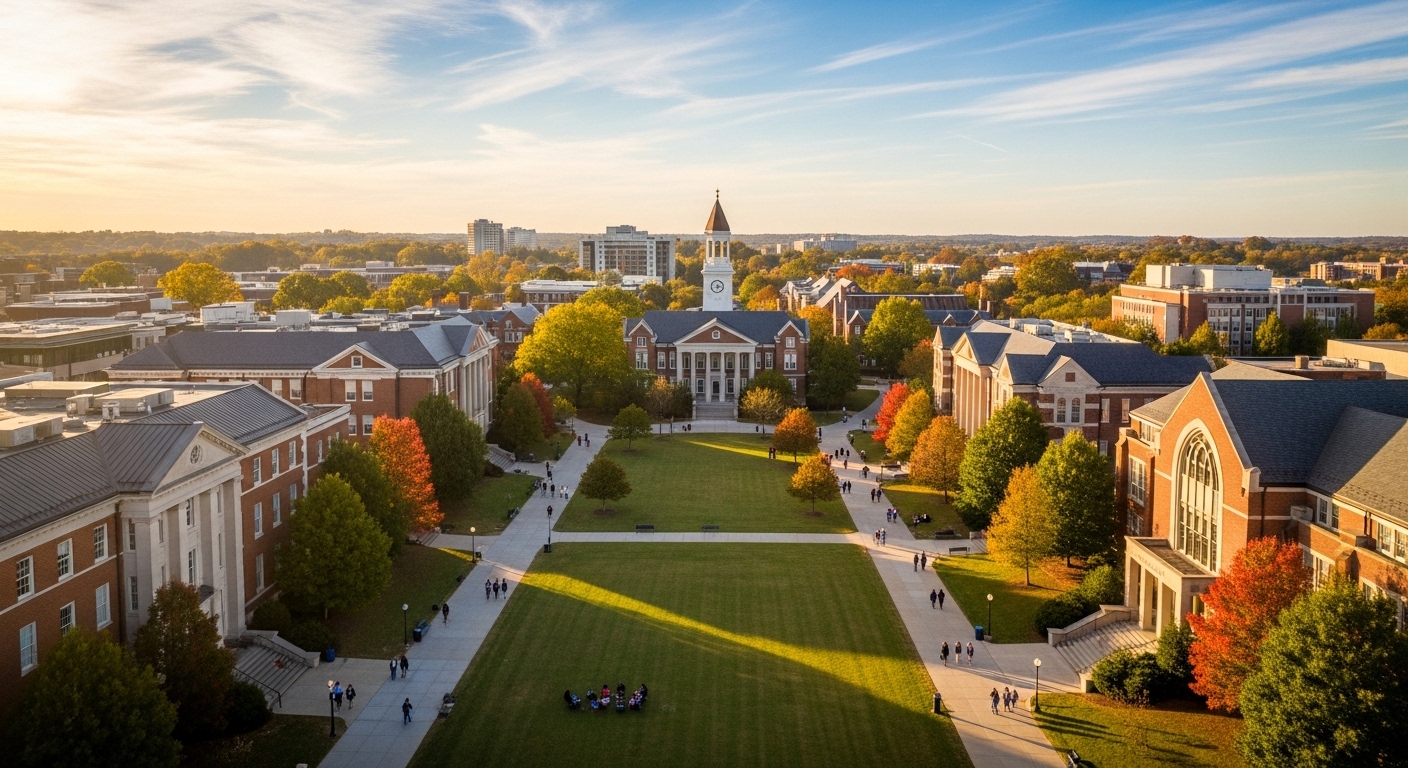
Vanderbilt University – A Complete Parent’s Guide to Admission and Financial Aid for Top U.S. University Success
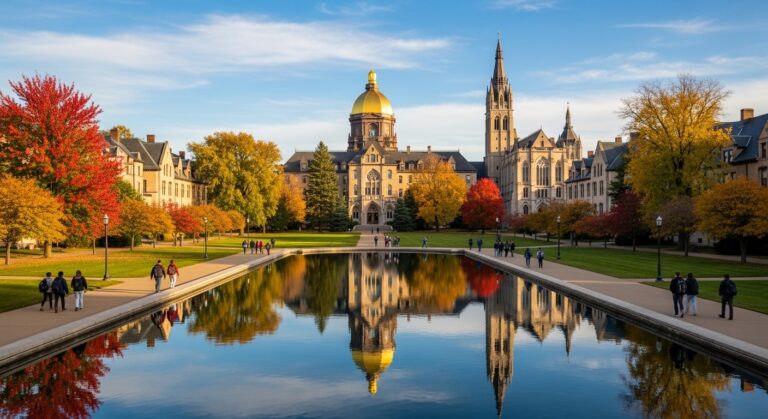
Located in Nashville, Tennessee, Vanderbilt University is widely recognized as one of the most prestigious private research universities in the southern United States. With an outstanding faculty, world-class research facilities, and the vibrant cultural energy of Nashville—known internationally as a center for music and the arts—Vanderbilt attracts exceptional students from across the globe each year.
Vanderbilt follows a holistic admissions review, meaning that the university evaluates not only a student’s academic performance but also their extracurricular involvement, personal character, and overall potential for contribution. As a result, students should begin preparing broadly and strategically throughout their high school years.
In this guide, I will provide Korean parents with a comprehensive overview of Vanderbilt, including the latest admissions statistics, academic preparation strategies, extracurricular planning, financial aid policies, and examples of successful student profiles.
1. Introduction
Vanderbilt University was founded in 1873 through the philanthropic contribution of Cornelius Vanderbilt, a prominent American industrialist. Since its founding, Vanderbilt has consistently ranked among the top universities in the United States in terms of research output, academic excellence, and educational environment.
Advantages of Location
Vanderbilt is located near downtown Nashville, a city known for its rich music, arts, and cultural scene. Students benefit from numerous opportunities including internships, performances, exhibitions, and professional networking experiences.
Residential and Student Life
First-year students live in a dedicated residential community called “The Commons.” This residential system helps students transition successfully into university life, offering academic support, mentorship, and social integration. Even after the first year, Vanderbilt continues to provide strong residential and community support systems both on and off campus.
Vanderbilt emphasizes small seminars, research opportunities, and close mentorship between professors and students, encouraging both intellectual and personal development.
Let us now explore the admissions statistics and preparation strategies in greater detail.
2. Admission Statistics and Application Requirements
(a) Recent Admissions Statistics
(Estimated based on the 2023–2024 Common Data Set)
- Total Applicants (First-Year): Approximately 45,313
- Students Admitted: Approximately 2,844
- Enrolled Freshmen: Approximately 1,622
- Acceptance Rate: ~6.3%
- First-Year Retention Rate: ~96.4%
- Total Undergraduate Enrollment: Approximately 7,152
Standardized Test Scores (Middle 50%)
(For Fall 2023 Enrolled Students, including Test-Optional applicants)
- SAT: 1500 – 1560
- ACT: 34 – 35
Key Application Deadlines
- Early Decision I: November 1
- Decision released mid-December
- Early Decision II: January 1
- Decision released mid-February
- Regular Decision: January 1
- Decision released late March – early April
- Enrollment Deposit Deadline: May 1
3. Basis for Selection: Admissions Evaluation Criteria
Vanderbilt uses a Holistic Review Process, meaning admissions officers consider both academic and non-academic factors when evaluating applicants.
(a) Academic Factors – Very Important
- Rigor of high school coursework
- High school GPA and class rank
- Application essays (Personal and Supplemental)
(b) Non-Academic Factors – Very Important
- Extracurricular activities
- Character and personal qualities
Vanderbilt is also traditionally strong in music and the arts, so students with exceptional artistic or creative talent may receive additional attention in the admissions process.
4. Academic Preparation
(a) Recommended High School Curriculum
Although Vanderbilt does not prescribe a formal “A-G track,” the admissions office strongly encourages students to pursue the most challenging curriculum available at their high school.
Recommended preparation includes:
- English: 4 years (including literature and writing)
- Mathematics: At least 4 years
- Algebra I
- Geometry
- Algebra II
- Pre-Calculus or Calculus
- Science: 4 years
- Biology, Chemistry, Physics
- STEM-focused students should strongly consider laboratory science courses
- Social Studies / History: 4 years
- Foreign Language: At least 2 years
(b) Academic Qualities Vanderbilt Values
1. Rigorous Coursework
Students should take advanced classes such as:
- AP courses
- IB programs
- Honors classes
- Dual Enrollment college courses
This demonstrates intellectual readiness and academic ambition.
2. Consistent Academic Performance
Students should maintain strong grades throughout high school. While taking more challenging courses in later years is encouraged, maintaining GPA stability is equally important.
3. Intellectual Curiosity
Students who pursue deeper academic interests—such as research projects, academic competitions, presentations, or independent studies—can effectively demonstrate genuine intellectual passion.
(c) Application Requirements
Applicants must submit:
- Application Platform:
- Common Application or Coalition Application
- Official High School Transcript
- Recommendation Letters
- 1 counselor recommendation (required)
- 2 teacher recommendations (required)
- Optional additional recommender
- Essays
- Personal Essay
- Vanderbilt Supplemental Essay
- Standardized Tests
- Test-Optional policy (no penalty if not submitted)
- Strong scores may still strengthen the application
- Application Fee: $50
5. Extracurricular Activities and Leadership
(a) Types of Activities Vanderbilt Appreciates
Arts and Cultural Activities
Because Vanderbilt is located in Nashville—a globally recognized music city—activities such as orchestra, band, performing arts, exhibitions, and creative projects are highly valued.
STEM Clubs and Competitions
Students interested in engineering or science may benefit from activities such as:
- Robotics clubs
- Research projects
- Science fairs
- Math competitions
Community Service and Civic Engagement
Volunteer work and community involvement—such as church service, nonprofit work, or outreach programs—demonstrate strong character and commitment to social responsibility.
(b) Importance of Leadership
Vanderbilt values students who demonstrate:
- Initiative
- Collaborative leadership
- Problem-solving abilities within a team
Examples include:
- Club presidents
- Student government leadership
- Community project organizers
Activities that show long-term commitment (for example, multiple years of volunteering or leadership) tend to carry greater credibility.
6. Financial Aid and Scholarships
(a) Financial Aid Policy
Vanderbilt is among the top U.S. private universities that aim to meet 100% of demonstrated financial need.
For U.S. citizens and permanent residents, Vanderbilt follows a Need-Blind admissions policy.
Financial aid packages may include:
- Grants (free aid)
- Work-study opportunities
- Low-interest student loans
Merit Scholarships
Vanderbilt offers several prestigious merit-based scholarships, including:
- Cornelius Vanderbilt Scholarship
- Chancellor’s Scholarship
These scholarships are awarded to students with exceptional academic performance and leadership potential.
(b) Financial Aid Application Process
Students must typically submit:
- FAFSA (Free Application for Federal Student Aid)
- CSS Profile
U.S. citizens and permanent residents must submit FAFSA.
International students are generally evaluated primarily through the CSS Profile.
Priority Deadlines
- Early Decision I applicants: around November 1
- Early Decision II / Regular Decision applicants: around January 1
Financial aid notifications are typically released after admission decisions, providing families with a personalized financial aid package.
Additional documents may include:
- Tax returns
- W-2 forms
- Verification worksheets
7. Sample Profiles of Admitted Students
Profile 1 – Engineering Applicant
Male student
GPA: 3.96 (Unweighted) / 4.4 (Weighted)
SAT: 1550
Reading & Writing: 760
Math: 790
Academic preparation:
- AP Physics C (Mechanics & E&M)
- AP Calculus BC
- AP Computer Science A
- 12 advanced STEM courses
Completed Dual Enrollment course in Data Structures at a local community college.
Extracurricular Activities:
- Vice President of Robotics Club
- National robotics competition champion
- Science Fair Project Leader
- Research on renewable energy efficiency
- STEM Tutor
- Mentored younger students in math and physics
Essay theme:
“Engineering for a Sustainable Future.”
He discussed his passion for solving environmental challenges through robotics and engineering.
Profile 2 – Arts / Music Applicant
Female student
GPA: 3.88 (Unweighted) / 4.2 (Weighted)
ACT: 34
Academic preparation:
- AP Music Theory
- AP English Literature
- Honors Choir
- Drama classes
Extracurricular Activities:
- Choir President
- National choral competition runner-up
- Lead performer in school musicals
- Church choir volunteer
Essay theme:
“Music as a Path to Unity.”
She described how music connects communities and how Vanderbilt’s Nashville location aligns with her artistic goals.
Profile 3 – Social Sciences Applicant
Female student
GPA: 3.92 (Unweighted) / 4.3 (Weighted)
Test-Optional
Academic preparation:
- AP U.S. History
- AP Government & Politics
- AP Psychology
- AP English Language
Extracurricular Activities:
- President of Model United Nations
- Political campaign volunteer
- Editor-in-Chief of school newspaper
Essay theme:
Civic Engagement and Social Impact
She discussed her desire to combine policy research and community engagement to create meaningful social change.
8. Supplemental Essay Guidance
Prompt
Vanderbilt University’s motto, “Crescere aude”, is Latin for “dare to grow.”
Applicants are asked to reflect on:
- how their identity, culture, or background has shaped their growth
- how they will contribute to the Vanderbilt campus community
(Maximum: 400 words)
Understanding the Prompt
This essay asks two key questions:
Who are you?
How have your identity, culture, or experiences shaped your personal growth?
Who will you become?
How will you contribute to the Vanderbilt community as you continue to grow?
A strong essay must demonstrate both personal reflection and future contribution.
Strategic Preparation During High School
1. Develop experiences tied to identity and background
Students should pursue projects connected to their culture or community.
Examples:
- Tutoring immigrant or bilingual students
- Organizing cultural events
Admissions differentiation often comes from why you did something and what you learned, not simply what you did.
2. Practice reflective writing
Students should develop the habit of writing short reflections on personal growth each year.
This practice greatly strengthens essay development later.
3. Demonstrate initiative and leadership
Admissions officers want to see students who lead meaningful change.
Examples:
- Creating a community service program
- Organizing social awareness campaigns
4. Identify how you will contribute to campus
Vanderbilt values:
- collaboration
- inclusion
- open-minded dialogue
Students should explain how their background will enrich campus perspectives.
5. How parents can support students
Parents can help by:
- encouraging deep conversations about experiences and identity
- supporting leadership and community projects
- helping students reflect on their growth over time
9. Conclusion: Vanderbilt Seeks Students Who Truly Embrace Growth
Vanderbilt is not simply looking for students with high academic scores.
The university seeks individuals who:
- reflect on their own experiences
- challenge themselves to grow
- contribute meaningfully to their communities
This essay prompt is not merely a writing exercise—it is an opportunity for students to demonstrate who they have become over four years of high school.
When students and parents work together to:
- interpret identity and culture positively
- design meaningful community contributions
- document personal growth
they can become applicants who genuinely embody Vanderbilt’s philosophy:
“Dare to Grow.”
Thank you.
Andy Lee
Elite Prep Suwanee
1291 Old Peachtree Rd. NW #127
Suwanee, GA 30024
Email: andy.lee@eliteprep.com
Website: www.eliteprep.com/suwanee
Tel & Text: 470-253-1004