
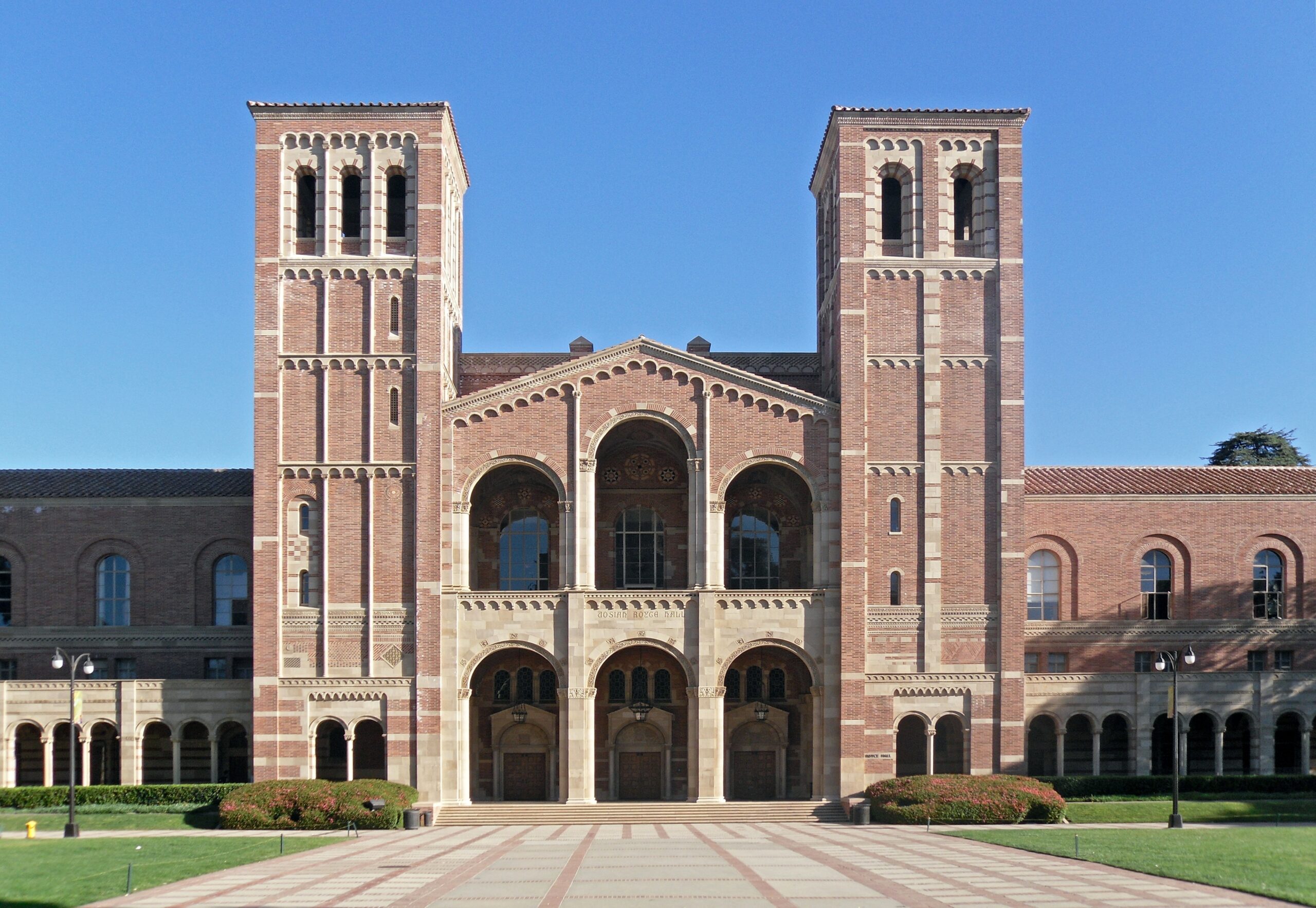
University of California, Los Angeles (UCLA) – A Parent’s Guide to Helping Your Child Gain Admission to a Top U.S. University
Admissions data changes slightly from year to year. In this article, I provide strategic guidance based on widely available trends and general admissions data to help you better prepare your child for a competitive university like UCLA.
Today, we will take a closer look at one of the most applied-to universities in the United States: the University of California, Los Angeles (UCLA).
1. Why UCLA?
UCLA has become a dream school for students around the world due to its academic prestige, world-class research environment, and the unique opportunities offered by its Los Angeles location.
It is especially popular for the following reasons:
- One of the top-ranked public universities in the United States
- Strength across multiple majors, particularly Engineering, Life Sciences, Business Economics, and Psychology
- A powerful global alumni network
- Excellent career placement and graduate school outcomes
However, popularity also means intense competition.
2. Recent Admissions Statistics and Competitiveness
(Based on general Class of 2028 data trends)
- Total Applicants: Approximately 146,000+ (among the highest in the nation)
- Overall Acceptance Rate: Around 9%
- California Residents: Approximately 9%
- Out-of-State Applicants: Approximately 9%
- International Students: Approximately 6%
- Average Unweighted GPA of Admitted Students: 3.93–4.00
More than half of admitted students have GPAs very close to a perfect 4.0. In other words, strong grades are no longer a distinguishing factor—they are a baseline requirement.
3. Understanding the Test-Blind Policy
UCLA, along with all University of California campuses, does not consider SAT or ACT scores in the admissions process (test-blind).
This is a significant shift in strategy.
Admissions decisions are now primarily determined by:
- UC-calculated GPA (focused on 10th and 11th grade coursework)
- Course rigor (AP, IB, Honors)
- Personal Insight Questions (PIQs) and extracurricular activities
Since test scores cannot offset weaker grades, consistent academic performance is essential.
4. Understanding the UC GPA Calculation
The University of California system uses its own GPA calculation method:
- Only 10th and 11th grade academic coursework is included
- AP/IB/Honors courses receive additional weighted points
- 9th grade is reviewed to evaluate academic trends
- 12th grade performance is verified through mid-year and final transcripts
This makes sophomore and junior year the most critical academic period of high school.
5. A–G Course Requirements
To be eligible for UC admission, students must complete the required A–G coursework:
- A (History/Social Science): 2 years
- B (English): 4 years
- C (Mathematics): 3 years (4 recommended)
- D (Laboratory Science): 2 years (3+ recommended)
- E (Language Other Than English): 2 years (3+ recommended)
- F (Visual and Performing Arts): 1 year
- G (College-Preparatory Elective): 1 year
Many students perform well academically but encounter challenges because their A–G coursework was not strategically planned early on. Careful planning should begin in 9th grade.
6. Academic Strategy: “All A’s” with Rigor
In a test-blind admissions environment, academic rigor carries even greater weight.
Key recommendations:
- Enroll in the most challenging AP/IB courses appropriate for the student
- STEM applicants should strongly consider AP Calculus and AP Physics
- Humanities and social science applicants should pursue advanced coursework such as AP English and AP History
- AP exam scores of 5 serve as strong evidence of academic readiness
However, taking too many advanced courses at the expense of GPA can be risky. It is better to excel in rigorous classes than to overload and see grades decline.
7. Extracurricular Activities: The Key to Differentiation
In an admissions pool where many applicants have similar academic profiles, extracurricular impact becomes the most powerful differentiator.
Two elements matter most:
1) Initiative
Did the student independently start or lead something?
2) Impact
Did the activity create meaningful change or measurable outcomes?
For example:
- Simply being a member of the Biology Club ❌
- Designing and leading a local water-quality research project ✅
Admissions officers value depth, leadership, and sustained commitment over a long list of activities.
8. Sample Admitted Student Profiles
▶ Profile A (Computer Engineering)
- UC GPA: 4.35 (Weighted)
- Founded a school coding club
- Completed 200+ hours of coding volunteer work
- Earned recognition in programming competitions
- PIQs emphasized leadership, problem-solving, and technical growth
▶ Profile B (Psychology)
- UC GPA: 4.25 (Weighted)
- Served as peer counseling leader
- Ongoing community volunteer service
- Completed online psychology coursework
- PIQs highlighted empathy, communication skills, and community contribution
The common thread between these profiles is consistency between intended major and extracurricular involvement.
9. Personal Insight Questions Strategy
The UC application does not include the Common App personal statement. Instead, students select 4 out of 8 prompts and respond in 350 words each.
These responses are closer to structured interview answers than literary essays.
Recommended topic combinations often include:
- Leadership
- Creativity (particularly problem-solving)
- A key talent or skill
- An educational opportunity or challenge
Important considerations:
- Use concrete examples rather than flowery language
- Include measurable outcomes when possible
- Clearly explain personal growth and lessons learned
For UC essays, clarity and direct communication are often more effective than dramatic storytelling.
10. Grade-by-Grade Preparation Strategy
9th Grade
- Plan A–G coursework carefully
- Explore various extracurricular interests
10th–11th Grade (Most Critical)
- Focus intensively on maximizing UC GPA
- Develop 2–3 core extracurricular commitments
- Pursue leadership opportunities
12th Grade
- UC application deadline: November 30
- Begin drafting PIQs during the summer before senior year
- Organize and refine activity descriptions strategically
11. Conclusion: What UCLA Is Truly Looking For
UCLA is not simply selecting students with high grades.
Admissions officers ultimately ask:
“What did this student do beyond the classroom?”
Grades are the ticket.
Impact is the key.
As parents, your role is to provide strategic direction and create an environment where your child can grow independently and authentically.
Thank you.
If you have any questions regarding your child’s college planning, please feel free to contact us anytime.
Website: www.eliteprep.com/contact-us
Phone: 470.253.1004
Andy Lee
Elite Prep Suwanee, powered by Elite Open School
1291 Old Peachtree Rd, NW #127
Suwanee, GA 30024
Phone: 470.253.1004
Email: andy.lee@eliteprep.com
Website: https://is.gd/yt9rgu
YouTube: www.youtube.com/@andyssamTV