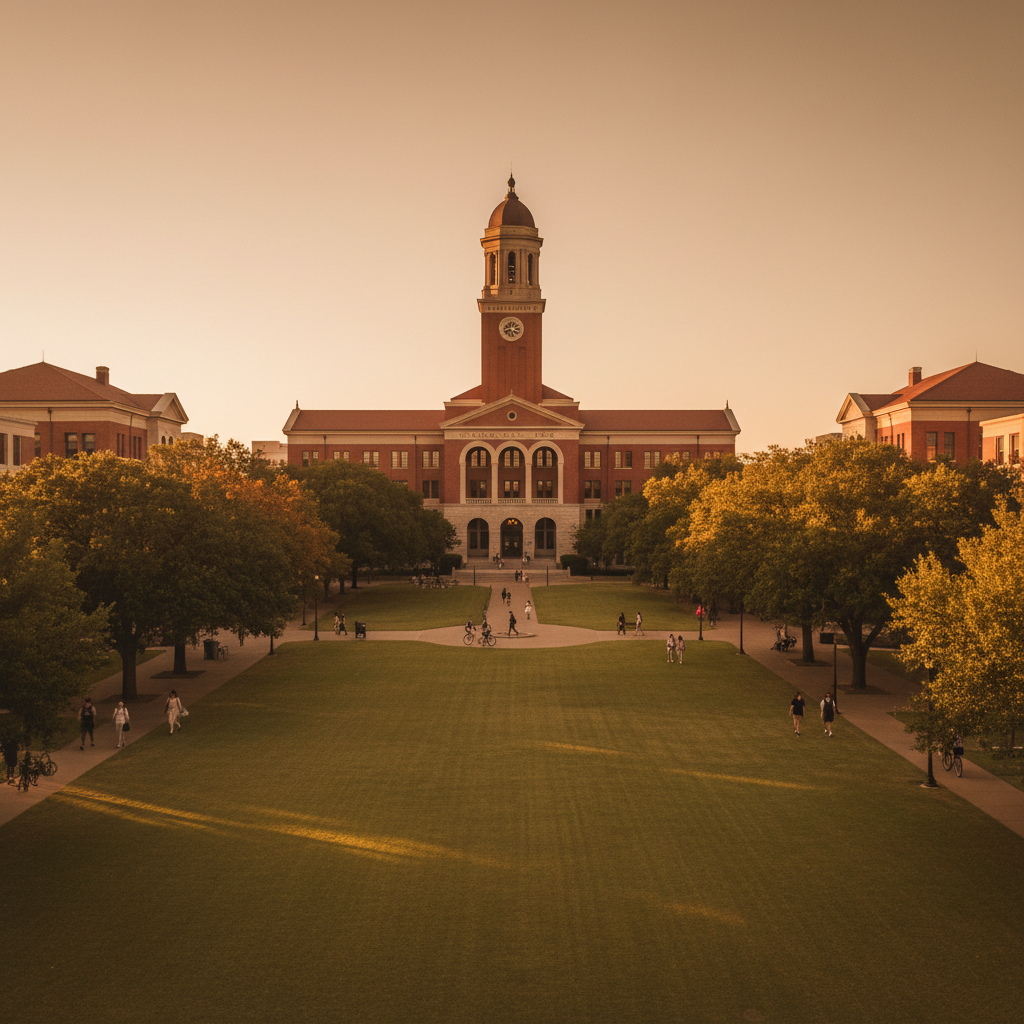
The Complete Parent’s Guide to Texas A&M University Admissions and Financial Aid
Korean-American parents frequently ask: “My child is very interested in engineering, how is Texas A&M? How does it compare to UT Austin, and is admission easier? Also, how is financial aid?”
Elite Prep, which has opened the “SAT Summer Bootcamp” that can simultaneously improve SAT scores and GPA during summer vacation, provides the answer.
Answer: Texas A&M is among America’s top engineering schools while offering relatively more admission opportunities than UT Austin. With a 51.66% acceptance rate for the Class of 2029, it maintains a reasonable level of selectivity. Starting fall 2026, the Aggie Assurance program will expand to provide free tuition for Texas resident freshmen whose family income and assets are below $100,000. Most importantly, with 72,560 students currently enrolled at the College Station campus alone, this massive scale provides diverse opportunities while boasting the powerful Aggie Network alumni connection.
1. Basic Information
| Category | Information |
|---|---|
| Founded | Established 1871, opened 1876 |
| Location | College Station, Texas |
| Institution Type | Public, land-, sea-, space-grant designated, AAU member |
| Total Enrollment | 72,560 students (College Station campus, 2024-25) |
| Undergraduate Enrollment | 60,710 students (Fall 2024) |
| Student-Faculty Ratio | 21:1 |
| Campus Size | 5,200 acres |
| Faculty and Staff | 4,200 faculty + 12,000 staff |
Texas A&M University was established in 1871 and began its first classes in 1876 as Texas’s first public university. As evidenced by its original name “Agricultural and Mechanical College of Texas,” it began with a specialization in agriculture and engineering fields, but has now developed into a comprehensive research university. It is one of the few universities in America to receive all three designations: land-grant, sea-grant, and space-grant, and is also a member of the AAU (Association of American Universities), a consortium of prestigious research universities.
2. Rankings
📊 Overall University Rankings (2026)
| Ranking Organization | Rank |
|---|---|
| US News National Universities | #51 |
| US News Top Public Schools | #21 |
| US News Best Value (Public) | #13 |
| Wall Street Journal (Texas Public #1) | Texas’s top public university for 3 consecutive years |
| Global University Visibility | #2 (US public universities), #8 (all US universities) |
🔬 Major Field Rankings
| Academic Field | Rank |
|---|---|
| Petroleum Engineering (Undergraduate) | #1 (US News 2025) |
| Petroleum Engineering (Graduate) | #2 (US News 2025) |
| Veterinary Medicine | #7 (among public universities) |
| Online MBA (Veterans) | #1 (2 consecutive years) |
| Industrial Engineering (Online) | #2 (8-place improvement) |
| Law School – Dispute Resolution | #5 overall, #2 public |
3. Major Colleges
⚙️ Dwight Look College of Engineering
Texas A&M’s College of Engineering is among America’s finest, with petroleum engineering ranking #1 nationally. It features a unique structure through the ETAM (Entry to a Major) system where students determine their major after one year.
💼 Mays Business School
An excellent business school where the online MBA veterans program ranks #1 nationally, showing strength across all areas including accounting, finance, and marketing.
🏥 College of Veterinary Medicine & Biomedical Sciences
A college of the highest authority in veterinary medicine, ranking #7 among public universities.
🌾 College of Agriculture and Life Sciences
The agriculture field, which represents the university’s roots, still maintains the nation’s highest level and holds a leading position in food science, horticulture, and animal science.
📚 College of Liberal Arts
The humanities and social sciences fields are also excellent, particularly receiving good evaluations in international studies and political science.
4. Admission Information
📈 Acceptance Rate and Competitiveness
| Year | Applicants | Acceptance Rate |
|---|---|---|
| Class of 2029 | 62,967 | 51.66% |
| 2025 Cycle | 89,422 | 57.43% – 51.3% |
| In-state vs Out-of-state | – | In-state: 59%, Out-of-state: 49% (Class of 2028) |
📊 Academic Profile
| Metric | Middle 50% Range |
|---|---|
| SAT Total (Class of 2028) | 1160-1390 |
| ACT Composite (Class of 2028) | 25-31 (or 26-31) |
| GPA (Estimated) | 3.48-3.71 |
| Top 10% (Automatic Admission) | For Texas residents |
📅 Application Timeline (2025-26 Cycle)
| Application Type | Deadline |
|---|---|
| Early Action (Recommended) | October 15 (recommended for engineering) |
| Regular Decision | December 1 |
| Application Opens | August 1 |
📝 Essays and Application Factors
Five factors Texas A&M rates as “very important”: rigor of high school curriculum, class rank, GPA, extracurricular activities, and talent/ability. “Important” factors include essays, first-generation college status, geography, state residency, volunteer work, and work experience. Multiple supplemental essays are required.
5. Cost and Financial Aid
💰 2025-26 Academic Year Costs
| Item | Texas Residents | Out-of-State Residents |
|---|---|---|
| Tuition and Fees | $12,928 | $40,157 |
| Room and Board | $13,008 | $13,008 |
| Total Cost (COA) | About $33,180 | About $62,272 |
🎓 Aggie Assurance Program (2026 Expansion)
| Family Income Level | Benefit | Effective Date |
|---|---|---|
| Below $60,000 | Free tuition + fees | Since 2023 |
| Below $100,000 | Free tuition + fees | Starting Fall 2026 |
| $60,000-$130,000 | Tuition assistance grants $500-$1,500 | Since 2021 |
6. Campus Life
🏙️ Location and Campus
College Station is a typical college town located about 1.5 hours by car from Houston and 3 hours from Dallas. The expansive 5,200-acre campus is one of the largest university campuses in America.
🏠 Housing and Residence
There are various residence hall options to accommodate the massive student body of 72,560, and on-campus living is strongly recommended for freshmen. On-campus apartment rentals range from $840 for studios to $1,645 for 2-3 bedroom units.
🎭 Student Activities
There are over 1,000 student clubs and organizations, and the school is particularly known for strong Aggie Spirit and traditions. Abundant leadership opportunities exist through Corps of Cadets, Student Government, Greek Life, and more.
⚽ Sports
As a member of the SEC (Southeastern Conference), football is particularly famous. Kyle Field is a massive stadium accommodating over 100,000 people and is famous for the 12th Man tradition.
7. Employment and Career
📈 Employment Outcomes
| Metric | Figure |
|---|---|
| 4-Year Graduation Rate | 61% |
| Median Salary 6 Years After Graduation | $59,386 |
| Average Salary 1 Year After Graduation | About $52,000 (highest in Texas) |
| Graduates with No Debt | 63% (2024-25, national average 45%) |
🏢 Major Employment Fields
- Energy Sector: ExxonMobil, Chevron, Shell, ConocoPhillips, etc.
- Technology: Microsoft, Google, Amazon, Texas Instruments, etc.
- Aerospace: NASA, Boeing, Lockheed Martin, etc.
- Agriculture/Food: Cargill, Tyson Foods, Coca-Cola, etc.
- Finance: Goldman Sachs, JP Morgan Chase, Wells Fargo, etc.
8. Five Common Misconceptions Korean Parents Have
❌ Misconception 1: “A&M is an agricultural college, so other fields must be weak”
Reality: Current Texas A&M is top-tier not only in agriculture but in all fields including engineering, business, and veterinary medicine. Petroleum engineering ranks #1 nationally, and the online MBA program has been #1 nationally for two consecutive years.
❌ Misconception 2: “It’s much easier to get into than UT Austin”
Reality: While the overall acceptance rate is 51-63%, the holistic review (out-of-state students and automatic admission ineligible) acceptance rate is 25-35%, making it quite competitive. Engineering and business schools are even more selective.
❌ Misconception 3: “There’s little financial aid for out-of-state students”
Reality: The average need-based scholarship for freshmen is $14,521, and 44% of freshmen receive need-based aid. Various merit-based scholarships are also abundant.
❌ Misconception 4: “It’s too conservative and lacks diversity”
Reality: Hispanic and Asian student populations are high, and faculty are evenly distributed by gender and race. Students from 44 states and 125 countries are enrolled.
❌ Misconception 5: “College Station is too rural, so internship opportunities are limited”
Reality: Houston and Dallas are nearby providing abundant internship opportunities, and with research expenditures exceeding $1.131 billion in 2020 (first in Texas), there are diverse research participation opportunities.
9. Five Distinctive Features Unique to Texas A&M University
① 🤝 World’s Strongest Alumni Network
The Aggie Network of over 500,000 members is not just a simple alumni association. United by the strong bond of “Aggie” identity, they help each other throughout employment, business, and life in general.
② 📚 Triple Crown: Land-Sea-Space Grant
As one of the few universities in America to receive all three designations—land-grant, sea-grant, and space-grant—research infrastructure and government project participation opportunities are limitless.
③ 💰 Exceptional Value and Expanding Financial Aid
Starting 2026, free tuition will be provided to Texas resident freshmen whose family income is below $100,000, and it boasts #13 Best Value nationally among public universities.
④ 🎓 Flexibility of the ETAM System
The College of Engineering’s Entry to a Major (ETAM) system allows students to experience various engineering fields for one year before deciding on a major, advantageous for career exploration.
⑤ 🏈 Campus Culture Where Tradition and Modernity Coexist
It provides a special university experience where unique traditions like Corps of Cadets, 12th Man, and Aggie Spirit coexist with state-of-the-art research facilities.
10. Real Student Profiles
📚 Case 1: K.S. Student (Class of 2029, College of Engineering)
- GPA: Unweighted 3.89 / Fully Weighted 4.51
- SAT: 1480 (EBRW 720, Math 760)
- AP/Honors: 12 AP courses (Calculus BC 5, Physics C both 5, Chemistry 4, Biology 4, Statistics 5, Computer Science A 5, English Language 4, US History 3, World History 4, Spanish Language 3, Macroeconomics 4, Microeconomics 5), 6 Honors courses
- Extracurricular Activities:
- Robotics Club Team Captain (11-12th grade)
- Math Olympiad state competition qualifier (10-12th grade)
- Local science museum volunteer 300 hours (9-12th grade)
- Summer Research Internship at local university (11th grade summer)
- National Honor Society (11-12th grade)
- Computer Science Honor Society founding member (12th grade)
- Special Note: Independently developed a smart farming system using Arduino and won first place at the regional science fair. Used this project as the Common App essay topic.
📊 Case 2: L.H. Student (Class of 2028, Business School)
- GPA: Unweighted 3.85 / Fully Weighted 4.42
- ACT: 32 (English 34, Math 31, Reading 33, Science 30)
- AP/DE: 8 AP courses (Calculus AB 4, Statistics 5, English Literature 4, US Government 4, Macroeconomics 5, Psychology 4, Spanish Literature 3, Art History 4), 4 Dual Enrollment courses (Business, Accounting, Marketing, Public Speaking)
- Extracurricular Activities:
- Student Government President (12th grade)
- DECA Club Vice President (11-12th grade), state competition qualifier
- Hospital Volunteer 400 hours (10-12th grade)
- Part-time job at local bank (11-12th grade)
- Model UN (9-12th grade)
- School Newspaper Editor (11-12th grade)
- Special Note: Established a student-run credit union at high school and conducted financial education programs. Used this experience to write supplemental essay on social entrepreneurship.
11. Grade-Level Preparation Strategy
🎯 Middle School Years
- Build foundation in math and science (especially algebra)
- Develop reading habits and improve writing skills
- Experience various activities to explore areas of interest
📚 9th Grade (Freshman Year)
- Begin GPA management – every semester matters
- Challenge Honors courses (math, science, English)
- Join clubs of interest and begin activities
- Continue foreign language study (minimum 3 years recommended)
💪 10th Grade (Sophomore Year)
- Challenge first AP courses (AP World History, AP Human Geography, etc.)
- Take PSAT to identify weaknesses
- Seek leadership roles in extracurricular activities
- Participate in summer programs (academic camps, volunteer work, etc.)
🎯 11th Grade (Junior Year) – Most Important Year
- Take challenging AP courses (Calculus, Physics, Chemistry, etc.)
- Begin serious SAT/ACT preparation and testing (multiple times)
- Focus on class rank management if Texas resident
- Participate in summer internships, research programs
- Visit colleges and gather information
📝 12th Grade (Senior Year)
- Meet Early Action deadline (October 15 – recommended for engineering)
- Write multiple essays – start early
- Request recommendation letters (by end of 11th grade)
- Show Demonstrated Interest
- Prepare financial aid documents (FAFSA, etc.)
12. 11th-12th Grade Checklist
📋 11th Grade Checklist
- Take SAT/ACT for the first time (spring)
- Prepare for AP exams (May)
- Apply to summer programs
- Begin college research
- Build relationships with teachers for recommendation letters
- Expand leadership roles in extracurricular activities
- Check class rank if Texas resident
📋 12th Grade Checklist
- August: Create Common Application account, draft essays
- September: Request recommendation letters, request transcripts
- October 15: Early Action application (recommended for engineering)
- November: Final SAT/ACT testing
- December 1: Regular Decision deadline
- January-February: Submit FAFSA and CSS Profile
- March-April: Acceptance decisions and financial aid comparison
- May 1: Final enrollment decision
Conclusion
For what type of student is Texas A&M University suitable?
- Students with genuine passion for engineering or agriculture who want world-class education
- Students who want to utilize diverse opportunities at a large university while maintaining strong community spirit
- Students who value lifelong networking and mentorship
- Students who want to experience unique university culture where tradition and modernity harmonize
- Students who want to build careers in Texas or the energy industry
- Students from middle-class families who want quality education without financial burden
- Students who want to participate in research from undergraduate level in a research-focused environment
- Students who value leadership and service and want to contribute to society
Sixty-three percent of Texas A&M graduates complete their studies debt-free, and the average salary one year after graduation is $52,000, the highest in Texas. Starting 2026, free tuition will be provided to Texas resident students whose family income is below $100,000, further increasing educational accessibility.
If you want to lay the foundation for lifelong success and happiness rather than simply pursuing admission to a prestigious university, seriously consider Texas A&M University. Gig ’em, Aggies! Start right now.