A Parent’s Guide to Successful Admission at Brown University
1. Introduction: Brown University, A Haven of Freedom and Intellect
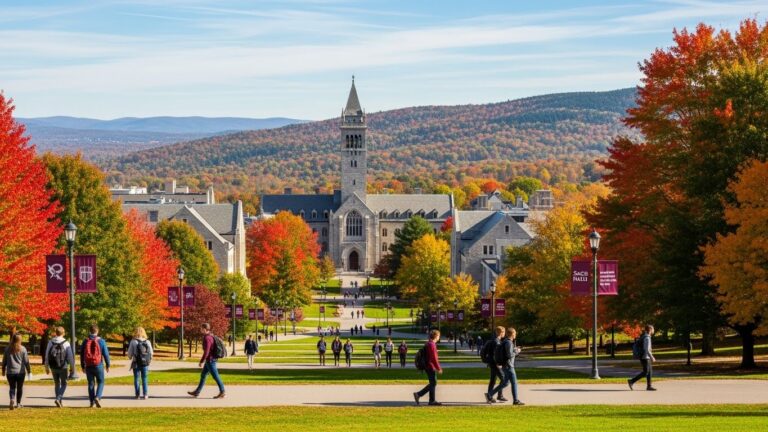
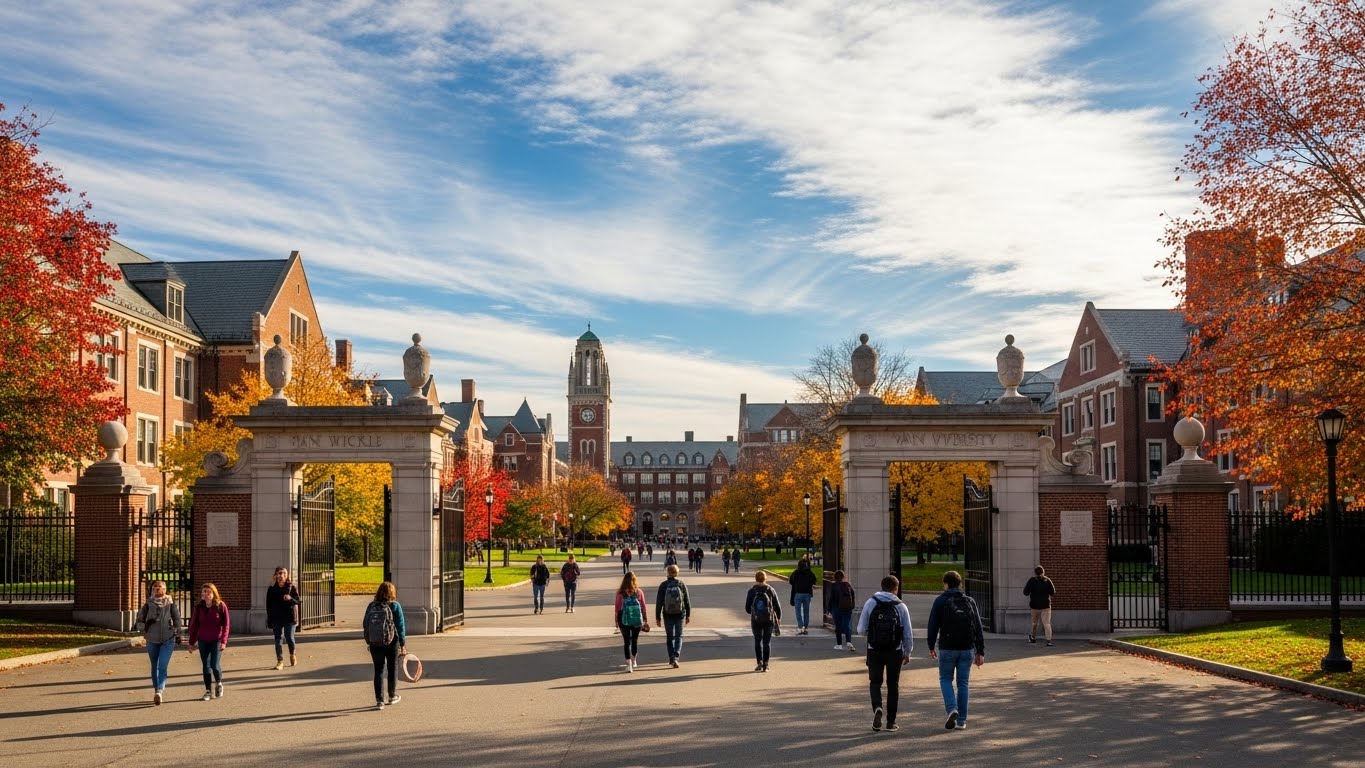
Today, we are focusing on one of the most distinguished Ivy League institutions: Brown University, located in the historic city of Providence, Rhode Island.
Brown occupies a truly unique and special position within the Ivy League, chiefly renowned worldwide for its Open Curriculum. This revolutionary system grants students unprecedented freedom to design their own educational path, requiring no core mandatory classes. This distinct feature has allowed Brown to break down academic boundaries, establishing itself as a magnet for proactive, deeply curious, and self-directed scholars.
Brown is a highly attractive goal for many ambitious families because it maintains traditional academic strengths (particularly in engineering, computer science, and economics) while providing an environment where your child’s creativity and interdisciplinary thinking can truly flourish. Brown graduates stand out as innovative leaders across diverse fields, empowered by self-directed learning and exceptional problem-solving skills that allow them to move beyond conventional thinking. Helping your student grow from a high school star into a genuine intellectual explorer is the essential key to Brown admission.
2. Admission Statistics and Application Requirements: A Highly Selective Gateway
In recent years, the competition for a spot at Brown has intensified beyond measure. Based on the acceptance rates for the classes of 2027 and 2028, Brown maintains an acceptance rate in the low 5% range, cementing its status as one of the most selective universities in the Ivy League. For instance, recent application pools have soared well over 50,000, yet only about 2,500 students received the final offer of admission. These statistics clearly indicate that acceptance requires not just academic excellence, but a truly unique profile, compelling character, and a deep academic fit.
Academic Metrics
The GPA distribution among admitted students reveals that nearly all maintained top-tier grades throughout high school. The average unweighted GPA for successful applicants is close to a perfect 4.0, and applicants generally rank within the top 5% of their graduating class.
Regarding standardized testing, Brown currently maintains a Test-Required policy. The mid-50% range for admitted students on the SAT typically falls between 1510 and 1570. For the ACT composite score, the mid-50% range is between 34 and a perfect 36.
Deadlines and Residency Status
Since Brown is a private university, there is no significant difference in acceptance rates between in-state and out-of-state students, unlike public universities. All applicants are evaluated against the same exceptionally high standard.
There are two primary application tracks:
1. Early Decision (ED): The deadline is typically November 1st.
2. Regular Decision (RD): The deadline is typically January 1st.
If Brown is your child’s clear first choice, we strongly recommend strategically utilizing the Early Decision track, which historically offers a relatively higher acceptance rate.
3. Selection Criteria: Intellectual Curiosity and Fit for the Open Curriculum
Brown’s selection criteria encompass academic and non-academic factors. Crucially, Brown conducts a deep evaluation of a student’s Intellectual Vitality and their suitability for the self-directed Open Curriculum.
Academic Rigor
A flawless GPA is the baseline. Admissions officers meticulously examine whether the applicant selected the most challenging curriculum available in their high school, which should include numerous AP (Advanced Placement) or IB (International Baccalaureate) Diploma courses. More important than simply taking difficult classes is achieving outstanding results in them (e.g., scoring 5s on AP exams or 7s on IB Higher Level courses). Brown favors broadly educated students and seeks evidence of deep, balanced study across the humanities, sciences, mathematics, and foreign languages.
Non-Academic Depth
The key to Brown admission often lies in the non-academic components—the individuality and initiative reflected in letters of recommendation, essays, and extracurricular activities.
1. Letters of Recommendation (LORs): Brown values insight into how a student’s intellectual curiosity manifests in the classroom. The best recommendations go beyond praising diligence; they use specific anecdotes to describe the student’s *intellectual initiative*—how they questioned, explored beyond the lesson plan, or drove deeper class discussions.
2. Essays: Essays are the crucial connection point to Brown’s philosophy. Your child must clearly articulate *why* they want the freedom to design their own course of study without a mandated core curriculum, and *which* academic areas they plan to integrate. Unique perspectives, profound self-reflection, and an authentic voice are mandatory.
3. Activities: Quality over quantity is paramount. The focus is not on the number of awards, but the depth of impact and leadership achieved in one or two primary areas. Brown especially looks for activities that demonstrate a student’s willingness to innovate, break existing molds, and take intellectual risks.
4. Academic Preparation Strategy: The Intellectual Journey
To nurture the “intellectual explorer” Brown seeks, a deliberate and strategic curriculum plan is essential throughout the four years of high school.
Recommended Course Progression
* 9th Grade (Freshman Year): Focus on building a solid foundation. Enroll in Honors-level math, science, and English, establishing strong academic habits. Use elective classes to explore areas of genuine interest that may lead to future AP/IB courses (e.g., introductory computer science or advanced art).
* 10th Grade (Sophomore Year): Begin taking challenging AP/IB courses. Gradually increase the academic load by selecting 2–3 rigorous courses, such as AP World History, AP Physics 1, or AP European History.
* 11th Grade (Junior Year): This is the core year for college admissions. Students should take the maximum number of challenging AP/IB courses (4–6 recommended). To demonstrate the intellectual curiosity Brown demands, consider enrolling in courses not typically offered by the high school, such as AP Seminar, AP Research, or university collaboration programs.
* 12th Grade (Senior Year): Maintain rigor by taking 5–6 high-level courses. Students should focus on advanced subjects related to their intended college major, proving they are ready for university-level work. Maintaining this academic intensity is also critical for satisfying Brown’s matriculation requirements.
Essential Qualities to Develop
Brown doesn’t just seek students who “do well” academically; they seek students who ask *why* and actively seek answers. Parents should encourage their children to develop the following traits:
1. Cross-Disciplinary Fusion: Encourage thinking that connects seemingly unrelated fields. For example, analyzing literary narratives using statistical data analysis to study social phenomena, or applying art history knowledge to modern technology product design.
2. Independent Research: Insist that your student undertakes an Independent Research Project lasting six months or more on a topic of their own choosing, outside of standard homework. This is the strongest evidence that your student has the capacity to successfully lead their education under Brown’s Open Curriculum.
3. Intellectual Risk-Taking: Foster a willingness to challenge themselves and explore unknown subjects, even if failure is possible. This attitude—of embracing learning outside one’s comfort zone—will powerfully inform their essays and recommendations.
5. Extracurricular Activities and Leadership: Demonstrating Depth and Impact
Brown values sustained passion and deep commitment in specific areas over a laundry list of general activities. Brown’s preferred activities focus on reflecting the student’s proactive intellectual exploration.
Preferred Activities and Strategies
* STEM (Science, Technology, Engineering, Mathematics): Focus on problem-solving projects rather than just competition awards. High value is placed on research (e.g., building an AI model to address environmental issues or participating in a research project analyzing patient data at a local hospital).
* Arts and Humanities: Brown values a strong humanities foundation. Powerful examples include using creative endeavors (writing, composition, visual arts) to express a personal viewpoint on social issues, and sharing this work to create impact in the community.
* Service and Social Justice: Brown seeks socially conscious leaders. Look beyond general volunteering. The strongest applications involve deep study of a specific social problem (e.g., homelessness or educational inequality) and the execution of innovative solutions (e.g., founding a non-profit or designing an effective fundraising campaign).
Advice on Concrete Leadership Examples
The leadership Brown seeks means far more than holding the of “President.”
* Founder/Innovator Leadership: Experiences where your child conceptualized and established a new club or program to solve a specific community or school problem (e.g., creating a “Historical Statistics Club” to foster new cross-disciplinary academic exploration).
* Mentor Leadership: Systematically building a one-on-one mentoring program for younger students or successfully running an educational camp utilizing their specialized knowledge for elementary school students.
* Conflict Resolution Leadership: Mature examples of mediating and resolving complex disagreements within the school or community, leading to positive, lasting change.
In every activity, your student must strongly articulate how their efforts connect to Brown’s core values of self-direction and open inquiry.
6. Financial Aid and Scholarships: Opportunity Regardless of Background
Brown University is highly generous with its financial aid policies and is committed to ensuring that all admitted students can afford their education without undue financial burden.
Need-Blind Policy
Brown employs a Need-Blind policy for U.S. citizens, permanent residents, and DACA recipients. This means admissions officers make their decision solely based on the student’s merit and potential, without any knowledge of whether the student requires financial assistance. This should provide great reassurance to families.
The Financial Aid Guarantee
Brown promises to meet 100% of the demonstrated financial need for all admitted students. This support is typically provided through Grants (which do not need to be repaid) rather than loans. You can be assured that if your child is admitted, your family’s economic situation will not be an obstacle to their education.
Scholarship Types and Procedures
Brown primarily offers need-based financial aid and rarely provides merit scholarships. Families must concentrate on accurately submitting two key documents by their respective deadlines:
1. FAFSA (Free Application for Federal Student Aid): Required to apply for federal grants and loans.
2. CSS Profile (College Scholarship Service Profile): Required for Brown to calculate its institutional grant aid. This demands more detailed financial information than the FAFSA and must be submitted close to the application deadline.
Focus on mastering these financial aid procedures to ensure this aspect of the application process proceeds smoothly.
7. Sample Admitted Student Profiles
Admitted students at Brown are not uniform; they are united by a deep embodiment of Brown’s philosophy: Intellectual Vitality. The following are three composite profiles reflecting the characteristics of actual successful applicants.
Profile 1: The Interdisciplinary Scientist
* GPA / SAT: 4.6 Weighted GPA / 1570 SAT
* Coursework: Completed 12 AP courses, including AP Calculus BC, AP Chemistry, AP Physics C (both sections), AP Computer Science A, AP Language & Comp, and AP Research.
* Extracurriculars:
* Two years of research in a regional university lab focused on AI for new drug discovery; close to being published as a co-author.
* Co-founder and President of the school robotics team, leading the development of a water purification system that fused coding with environmental sensors.
* Mentored middle school students in a dedicated science exploration program.
* Essay Theme: Submitted a reflective essay exploring the boundary between physics and philosophy, questioning how research into randomness and determinism could be applied to AI development through Brown’s specific Cognitive Science concentration.
Profile 2: The Social Activist Artist
* GPA / ACT: 4.4 Weighted GPA / 35 ACT
* Coursework: Completed the IB Diploma Program, with Higher Level (HL) courses in English, History, and Theater; Standard Level (SL) courses included Math Analysis and Biology.
* Extracurriculars:
* Founded a non-profit organization focused on youth mental health, developing a community program that incorporates art therapy.
* Served as Editor-in-Chief of the school newspaper, publishing an impactful documentary series on the lives of local immigrant communities.
* Active lead actress in a regional theater company, utilizing performances as a vehicle for social commentary.
* Essay Theme: Discussed fusing Brown’s Literary Arts and Public Policy programs to explore the power of storytelling in advocating for marginalized communities.
Profile 3: The Intellectual Explorer
* GPA / SAT: 4.5 Weighted GPA / SAT Not Submitted (Test-Optional)
* Coursework: Completed 10 AP courses across a broad spectrum, including AP Macro/Micro Economics, AP Government, AP Environmental Science, and AP Spanish Language.
* Extracurriculars:
* Leader of the school debate team, strong in debates synthesizing economics and ethical dilemmas; led the team to a regional championship.
* Completed a self-funded summer project traveling alone to European historical sites, analyzing the connection between ancient architecture and modern urban planning.
* Designed and taught a financial literacy program for adults at the local community library.
* Essay Theme: Described Brown as an “intellectual canvas,” articulating the unique aspiration of combining an interest in Classics and Business to design future sustainable cities, without the constraints of a traditional major structure.
8. Supplementary Essay Analysis: Mastering the “Why Brown” Strategy
Brown’s low acceptance rate stems from its dedication to selecting students who perfectly align with its distinct educational philosophy. The Supplementary Essays are the most critical tool for assessing this fundamental *fit*.
Key Supplementary Essay Prompts (Representative Themes)
While Brown slightly adjusts its prompts annually, the core themes remain constant:
1. Why Brown? (Community Contribution): “What unique aspect would you bring to the Brown community, and specifically, how do you plan to utilize Brown’s open intellectual environment?” (Approx. 250 words)
2. The Open Curriculum (Interdisciplinary Goals): “Brown’s Open Curriculum grants students the freedom to design their academic path. What two or more fields would you like to fuse or explore at Brown, and why?” (Approx. 200 words)
3. Academic Interest (Depth of Focus): “What academic area are you most deeply interested in, and how do you plan to explore this field at Brown? (PLME applicants have separate prompts.)” (Approx. 250 words)
The 4-Year Essay Preparation Strategy
Successful Brown essays are not written overnight in the 12th grade; the entire high school career serves as the material.
1. 9th–10th Grade: Exploration and Documentation: Help your child discover their genuine interests through diverse activities. Encourage them to consistently document their intellectual questions and reflections in a journal or notebook. This creates the foundational material for deep internal reflection, not just a list of accomplishments.
2. 11th Grade: Execution and Proof: Focus on completing an independent project or leadership activity that directly reflects your child’s deepest intellectual passion. Instead of writing, “I am interested in X,” they must be able to prove, “The project I completed will be the perfect starting point for fusing Environmental Science and Humanities at Brown.”
3. 12th Grade: Connecting the Dots: When writing the essays, your child must forge specific, logical links between their past activities and particular Brown faculty members, research centers, or unique courses (like Freshman Seminars). They must explain, logically and persuasively, why the Open Curriculum is *essential* for achieving their unique academic goals. The goal is to craft an essay that feels like a custom-tailored suit for Brown.
9. Conclusion: Practical Advice and Encouragement for Parents
Parents, acceptance to Brown University is not merely the result of high grades; it is evidence of how proactively your child designed their life and education over four years. Brown is looking for young captains ready to set sail with their own compass.
Advice for Parents:
* Avoid Comparison: Guard against your child mimicking the activities of their peers or trying to fill a checklist of “impressive” accomplishments. Brown seeks originality, not imitation. Give your child the space and time to dive deeply into one or two areas of genuine passion.
* Be an Enabler of Curiosity: Consistently encourage your child to ask profound questions and provide the material and emotional support needed to seek the answers. A parental willingness to accept failure and trial-and-error ultimately leads to the deepest learning experiences.
* Enjoy the Journey: The application process itself is a crucial period of self-discovery and growth for your child. Value the experience of learning and growing more highly than the pressure of the outcome.
While the door to Brown is narrow, students who pass through are guaranteed an environment where they can maximize their potential. By strategically preparing your child to align their unique character and intellectual fervor with Brown’s philosophy over the next four years, you can certainly achieve a successful outcome.
Thank you.
For more detailed education and financial aid consulting: Elite Prep Suwanee
www.eliteprep.com/suwanee
We provide personalized strategies tailored to your child’s specific situation.
Andy Lee / Elite Prep Suwanee powered by Elite Open School
1291 Old Peachtree Rd, NW #127
Suwanee, GA 30024
Email: andy.lee@eliteprep.com Tel & text: 470.253.1004
🎥 www.youtube.com/@andyssamTV