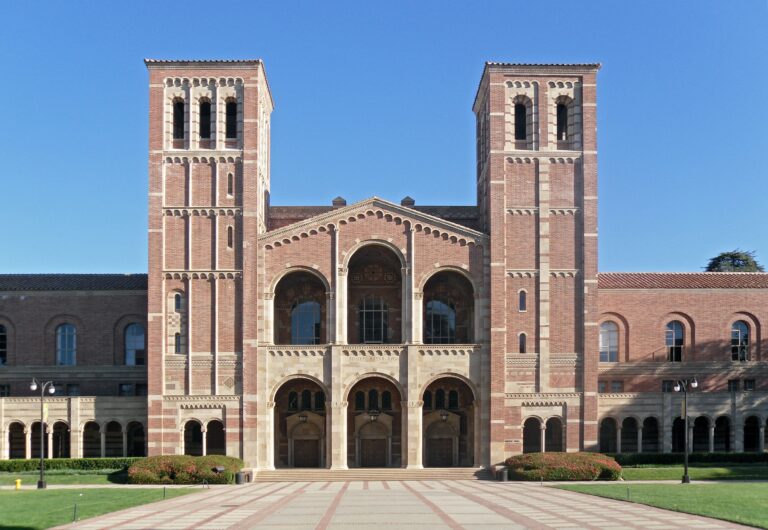

【University of Notre Dame】 – A Complete Guide for Parents to Help Their Child Gain Admission to a Top U.S. University and Maximize Financial Aid
A Practical Roadmap from a 30-Year College Admissions Expert
“Can My Child Really Get into Notre Dame?”
Today’s University of Notre Dame admissions landscape is completely different from what it was just five or ten years ago.
For the Class of 2029, Notre Dame’s overall acceptance rate dropped to approximately 9%. Just five years ago, for the Class of 2024, the rate was about 19%. The Regular Decision acceptance rate is now only 6.7%, while even Restrictive Early Action reached a historic low of 11.8%. Out of more than 35,000 applicants, only about 3,200 students received an offer of admission.
With the expansion of test-optional policies, the strengthening of holistic review, and the introduction of innovative financial aid initiatives such as Pathways to Notre Dame, the university is attracting highly competitive applicants from around the world. Notre Dame now demonstrates a level of selectivity comparable to many Ivy League institutions.
In this environment, the mindset of “We’ll just work harder starting tomorrow” no longer works. Only long-term, strategic preparation can create meaningful opportunities. In this article, I will share insights based on 30 years of real admissions consulting experience and data-driven strategies to guide your child toward Notre Dame.
1. Understanding the Core of Notre Dame Admissions
What Notre Dame Values Most
Based on Notre Dame’s Common Data Set and institutional philosophy, the university practices a truly holistic review process. While many factors are considered, the following are especially important.
First, the rigor of the high school curriculum. A high GPA alone is not enough. Admissions officers look closely at whether students challenged themselves with the most demanding courses available at their school.
Second, academic performance (GPA). Approximately 92% of admitted students rank in the top 10% of their high school class.
Third, essays. Notre Dame has stated that essays help them hear the student’s authentic voice, understand their humor, and empathize with their challenges.
Fourth, character and leadership. As a Catholic institution, Notre Dame places strong emphasis on service, community, integrity, and moral character.
Another critical factor is demonstrated interest, which Notre Dame considers “Important.” Campus visits, virtual sessions, communication with admissions, and genuine engagement can strengthen a student’s application.
Common Traits of Admitted Students
Admitted students are not simply “perfect resumes.” While academic excellence is essential, it is not sufficient.
The middle 50% SAT range is approximately 1470–1540, with a median around 1520. For ACT, the middle 50% range is 33–35, with a median of 34.
However, the most successful applicants often demonstrate:
- Deep passion in a specific area
- Meaningful leadership and contribution
- Commitment to service and community
- A sincere alignment with Notre Dame’s mission and values
Common Misconceptions Among Korean Parents
Myth 1: Being Catholic is required.
This is not true. Notre Dame welcomes students of all faiths, although service and community values are important.
Myth 2: A 1550 SAT guarantees admission.
Not at all. In a 9% acceptance environment, no score guarantees admission.
Myth 3: Legacy is necessary.
While about 28% of admitted students have legacy status, the majority do not. Strategic preparation still creates opportunity.
Myth 4: Athletics are required.
Athletic ability is not necessary, but teamwork and dedication are valued.
2. SAT, GPA, and AP Strategy
Target SAT Range
Notre Dame remains test-optional through the 2025–2026 cycle. However, this does not mean tests are irrelevant.
Recommended targets:
- 1500+: Submit scores
- 1520+: Strong
- 1540+: Highly competitive
Students below 1480 should consider test-optional and strengthen other areas.
For ACT, 34+ is competitive, and 35 is outstanding.
GPA Strategy
Notre Dame evaluates GPA alongside course rigor.
The ideal profile:
- 3.9+ unweighted GPA
- Most rigorous courses available
Avoid selecting easier courses just to protect GPA. Admissions officers know your school’s curriculum.
However, maintaining strong grades is equally important. Strategic balance matters.
AP, Honors, and Dual Enrollment
Core AP courses:
- AP English Language
- AP English Literature
- AP Calculus
- AP US History
- AP Chemistry or AP Physics
Differentiating courses:
- AP Research
- AP Seminar
- AP Statistics
- AP Computer Science
- AP Environmental Science
Typically, 8–12 rigorous courses across high school is competitive.
Dual Enrollment is also a strong alternative.
Timing and Balance
Recommended testing timeline:
- 10th grade: PSAT preparation
- Fall of 11th: PSAT/NMSQT
- Spring of 11th: First SAT
- Summer before 12th: Retake if needed
Balance test preparation with activities and academics.
3. Grade-by-Grade Strategy
Middle School
Focus on academic foundation, reading, writing, and exploring interests.
9th Grade
Strong start in GPA and Honors courses. Begin service and extracurricular involvement.
10th Grade
Clarify direction. Start AP courses and identify core activities.
11th Grade
The most critical year.
Take 3–5 AP courses.
Secure leadership roles.
Start college planning and essays.
12th Grade
Execute.
Complete applications, essays, and financial aid forms.
4. Real Student Case Studies
Case 1: J – A Meaningful Service Story
J had a 3.85 GPA and 1420 SAT initially. His strength was service.
He developed a Korean senior translation program that grew into a community initiative.
After strategic planning, he improved to:
- GPA 3.92
- SAT 1510
Result: REA admission to Notre Dame.
Case 2: S – From Rejection to Admission
S had:
- SAT 1540
- GPA 4.0
- Strong academics
But lacked a compelling story.
After restructuring her activities and focusing on education equity, she was admitted through RD.
5. Financial Aid and Scholarship Strategy
Need-Blind Policy
Notre Dame is now need-blind for all applicants, including international students.
100% Need Met + No-Loan
Notre Dame meets full demonstrated need without loans.
The average first-year aid package is approximately $67,855.
Required Documents
- FAFSA
- CSS Profile
- IDOC
Need vs Merit
Most aid is need-based. Merit scholarships are awarded to about 4% of students.
Even families earning $150,000–$200,000 may receive significant aid.
6. Application Checklist
11th Grade
- Strong academics
- SAT/ACT
- Leadership
- Summer programs
- Campus visits
- Essay brainstorming
12th Grade
- FAFSA and CSS
- Final testing
- REA or RD submission
- Essays and recommendations
7. Practical Advice
Avoid shallow activities. Focus on depth.
Write authentic essays.
Choose meaningful work over prestige.
Use early action strategically.
Parents should support, not control.
8. Final Thoughts
A 9% acceptance rate may feel intimidating.
However, success comes from long-term strategy and authentic preparation.
Notre Dame seeks students who combine academic excellence with compassion, leadership, and purpose.
The journey begins today.
If you would like personalized guidance for your child’s college admissions and financial aid strategy, please feel free to contact us.
Elite Prep Suwanee
1291 Old Peachtree Rd NW #127
Suwanee, GA 30024
Tel: 470.253.1004
Email: andy.lee@eliteprep.com
Contact: www.eliteprep.com/contact-us
YouTube: www.youtube.com/@andyssamTV