“What Kind of Students Do Top 50 U.S. Universities Really Want?”
When families start planning for U.S. college admissions, one of the most important questions they ask is:
“What kind of students does this college actually want?”
Rankings alone don’t tell the whole story. Each university has its own history, campus culture, and academic strengths. And based on that unique identity, each school tends to prefer a slightly different type of student.
This article summarizes the common characteristics and preferred student profiles of top 50 U.S. universities (based on U.S. News), from the perspective of Korean parents whose children attend high school in the United States. Instead of memorizing every single school, the goal is to help you see:
- What top universities broadly look for, and
- What type of college might be the best fit for your child’s personality, interests, and goals.
1. What Top 50 U.S. Universities Have in Common
Although each campus has its own distinct flavor, most top 50 universities consistently value five big things.
1) Strong academics with a challenging course load
Top schools don’t just want high grades. They want proof that your child:
- Challenged themselves with rigorous courses
(AP, IB, Honors, dual enrollment, etc.), and - Maintained a strong academic record across multiple years.
For STEM-focused campuses such as MIT, Caltech, Georgia Tech, Carnegie Mellon, UIUC, Purdue, Virginia Tech, and others, there is particular emphasis on:
- Math and science performance
- Depth in STEM courses
- Related projects, competitions, or research
2) Genuine intellectual curiosity
At places like Princeton, Harvard, Yale, Stanford, UChicago, Brown, and Columbia, admissions officers are not looking for “good test-takers” only. They are drawn to students who:
- Ask “why?” and “what if?” on their own
- Read, research, or build projects beyond what school requires
- Enjoy thinking deeply and making connections across subjects
Independent reading, research projects, writing, debate, or exploratory work outside the classroom are powerful signals of this intellectual curiosity.
3) Leadership and contribution to community
Many universities—Duke, Penn, Michigan, UNC, Notre Dame, Georgetown, UGA and others—place a high value on:
- Leadership in clubs, sports, or student government
- Community service and outreach
- Evidence that the student has made a positive difference in some group
This doesn’t mean every student must be student body president. Rather, colleges are looking for students who:
- Take initiative
- Accept responsibility
- Help move a team, club, or community forward
4) Collaboration, character, and “good people”
Schools like Rice, Northwestern, Vanderbilt, WashU, Emory, Wake Forest, Boston College, and Texas A&M are very intentional about building supportive, collaborative communities.
They pay close attention to:
- Teacher recommendations
- Essays and short answers
- Long-term patterns of behavior
They want students who are not only bright, but also:
- Honest and reliable
- Kind and considerate
- Able to work well in teams
- Willing to support and encourage peers
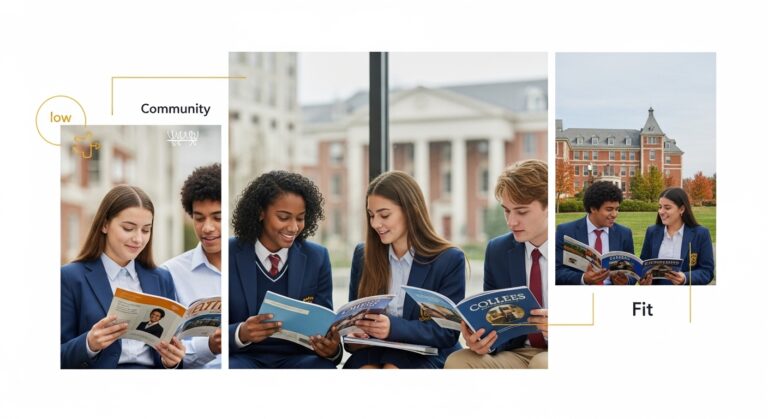
5) “Fit” with the campus culture
Every campus has a different vibe:
- UChicago: intense, discussion-based, academically quirky
- Brown / Rochester: high academic freedom with open curricula
- NYU / USC / BU: urban, fast-paced, city-integrated campuses
- Dartmouth / Wake Forest: smaller, close-knit, community-focused environments
Admissions officers will ask themselves, consciously or not:
“Will this student be happy here,
and will this student help make our community better?”
That sense of mutual fit plays a big role in holistic review.
2. Types of Universities and the Students They Tend to Prefer
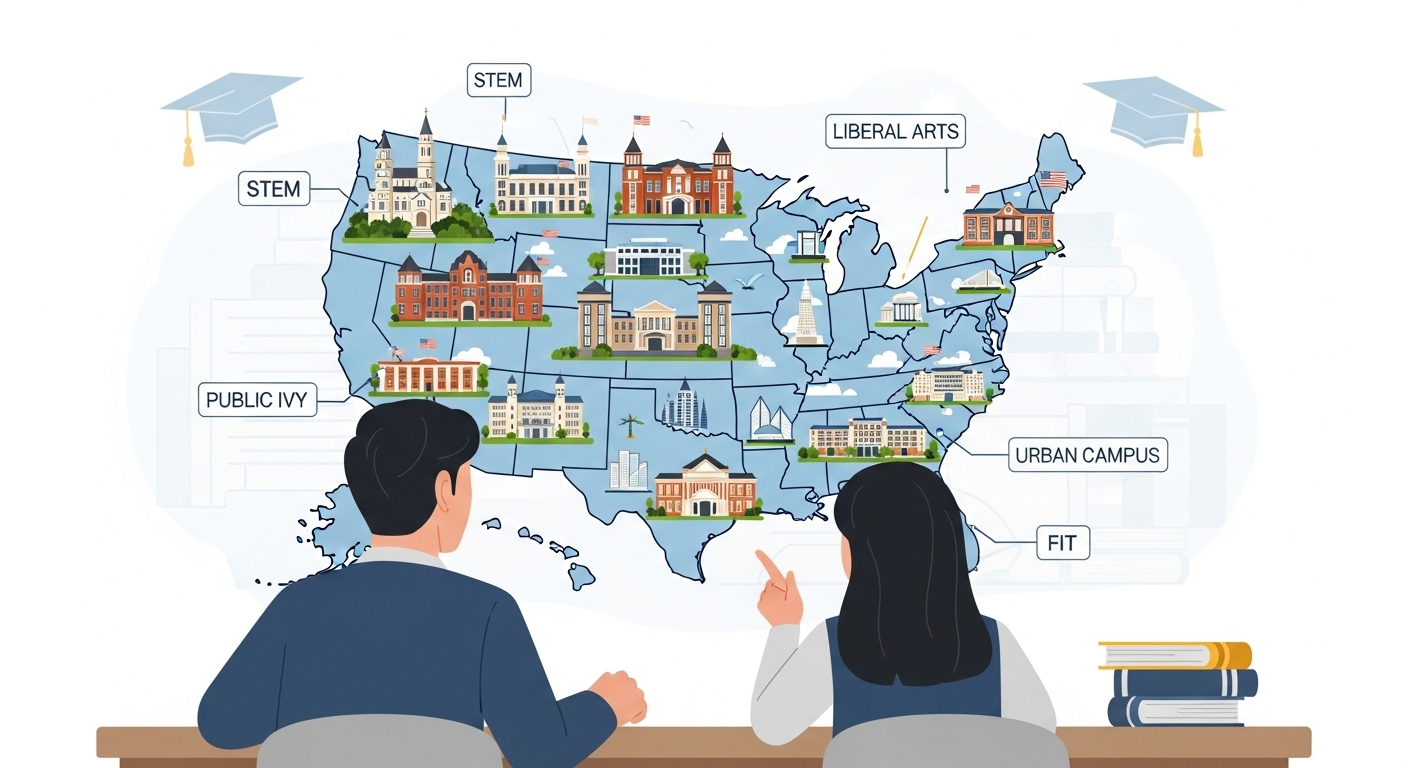
Rather than thinking school-by-school, it is often more helpful to think in terms of categories of universities.
① Ivy League & academically intense research universities
Examples: Princeton, Harvard, Yale, Columbia, Brown, Dartmouth, Penn, Cornell, UChicago, Stanford
Common traits these schools look for:
- Very strong academic performance
with rigorous coursework sustained over time - Deep intellectual curiosity
Students who ask big questions, connect ideas, and genuinely enjoy learning - Sense of purpose beyond themselves
Schools like Yale, Notre Dame, and Georgetown especially look for students who want to
make a meaningful impact on their communities and the world - Balanced leadership and character
They read essays and recommendations carefully to understand:- How the student treats others
- How they respond to setbacks
- Whether they lift up the people around them
If your child can clearly articulate why their learning matters and how they hope to use their education, they’re closer to this group’s ideal profile.
② Top STEM-focused and engineering universities
Examples: MIT, Caltech, Georgia Tech, Carnegie Mellon, Purdue, UIUC, Virginia Tech, Texas A&M, and others
These schools are looking for problem-solving STEM minds who also work well with others.
Key elements they emphasize:
- Exceptional strength in math and science
- High-level coursework (AP/IB Calculus, Physics, Chemistry, CS, etc.)
- Strong grades and, if applicable, strong standardized test scores
- Projects, competitions, and hands-on work
- Robotics teams, coding projects, engineering clubs, hackathons
- Research experiences or “maker” projects that show real initiative
- Grit and teamwork
- Willingness to wrestle with difficult problems
- Persistence in the face of failure
- Enjoyment of building and solving things together with others
For these campuses, it’s not enough to “like math.” They want students who use math and science to build, test, and improve things in the real world.
③ Large public flagships and “Public Ivies”
Examples: UC Berkeley, UCLA, UCSD, UCSB, UC Davis, UC Irvine, Michigan, UVA, UNC, Wisconsin, UIUC, UW Seattle, UT Austin, UF, UGA, Ohio State, Rutgers, Maryland, and others
These universities offer huge scale and enormous opportunity, but expect students to be independent.
They tend to value:
- Strong academic preparation
- Solid GPA with a rigorous course load
- Especially strong foundations in key subjects for competitive majors (engineering, business, etc.)
- Self-direction and adaptability
- Students who can find and use resources on their own
- Ability to navigate a large campus and large student body effectively
- Engagement in campus life and community
- Participation in clubs, sports, and service
- A willingness to join and contribute to school spirit and tradition
(e.g., Michigan’s “Go Blue,” Wisconsin’s “Wisconsin Idea,” UGA’s Bulldog pride)
These schools can be ideal for students who are proactive, organized, and eager to explore many options across a big university environment.
④ Urban, global private universities
Examples: NYU, USC, Boston University, Georgetown, Emory, Rice, Northwestern, WashU, Tufts, Boston College, and others
These campuses often draw students who want to connect academics with real-world experience in major cities.
What they often prioritize:
- Comfort in a city environment
- Students who can handle independence, fast pace, and diversity
- Ability to leverage internships and networks
- Interest in gaining practical experiences in finance, media, politics, tech, or the arts
- Initiative in seeking out research, internships, and fieldwork
- Communication skills and global mindset
- Openness to people from many cultures and backgrounds
- Strong interpersonal skills and collaboration
- For some schools (Georgetown, BC, etc.), a clear sense of ethics and social responsibility
These universities suit students who are energized by city life, networking, and living in the middle of real-world action.
⑤ Small- to mid-sized, community-centered universities
Examples: Dartmouth, Wake Forest, Lehigh, Rochester, Rice, Vanderbilt, Tufts, Notre Dame, and others
These schools emphasize tight-knit communities and close faculty-student relationships.
They tend to look for:
- Students who participate actively in small classes
- Comfortable with discussion-based learning
- Willing to speak up, listen, and engage thoughtfully
- Community orientation and strong character
- Notre Dame, Boston College, Georgetown, Wake Forest and similar schools,
with religious or humanistic traditions, especially value:- Integrity
- Service to others
- Empathy and compassion
- Notre Dame, Boston College, Georgetown, Wake Forest and similar schools,
- Balanced, multi-talented growth
- Schools like Lehigh, Vanderbilt, Rice appreciate students who:
- Take academics seriously
- Also invest in music, sports, clubs, or social activities
- Contribute to campus life in multiple ways
- Schools like Lehigh, Vanderbilt, Rice appreciate students who:
These campuses tend to be best for students who want to be known by name, mentored closely, and surrounded by a stable, family-like environment.
3. How to Think About “Fit” for Your Child
Instead of asking, “Which college is the best?”, it’s more helpful to ask,
“Which type of environment will help my child thrive and be happy?”
Here are some guiding questions you can discuss as a family:
- City vs. traditional campus
- Will my child be happier in a vibrant city (New York, LA, Boston, etc.)
or on a traditional, self-contained campus with nature, quads, and a quieter setting?
- Will my child be happier in a vibrant city (New York, LA, Boston, etc.)
- STEM-focused vs. humanities/arts-focused vs. balanced
- Is my child exceptionally strong and passionate in math and science?
- Or do they shine more in writing, languages, social sciences, or the arts?
- Or do they want a balanced mix?
- Large public vs. small/mid-sized private
- Will my child excel in a large environment with many choices but less hand-holding?
- Or will they do better in a smaller, high-mentorship setting?
- Comfort with religious or values-centered traditions
- Schools like Notre Dame, Georgetown, and Boston College have Catholic/Jesuit roots
and emphasize values such as faith, service, and ethics. - Would this kind of environment feel meaningful and supportive for your child?
- Schools like Notre Dame, Georgetown, and Boston College have Catholic/Jesuit roots
- Importance of sports, school spirit, and tradition
- Some students love big football games, chants, and strong school spirit
(Michigan, Wisconsin, Ohio State, UF, UGA, etc.). - Others prefer a quieter, more academic or arts-centered campus.
- Some students love big football games, chants, and strong school spirit
By exploring these questions together, you’ll gain a clearer picture of which “type” of top 50 university fits your child’s academic profile, personality, and long-term goals.
4. Beyond Rankings: Why Fit Matters More
In summary, top 50 U.S. universities generally look for:
- Strong academics and challenging coursework
- Genuine intellectual curiosity
- Leadership and community impact
- Collaboration, character, and integrity
- A good fit with the campus culture
However, the ideal environment for your child will not be the same as for another student with the same GPA or test scores. The “best” college is the place where your child can:
- Learn deeply
- Build healthy relationships
- Grow in confidence and character
- Take meaningful steps toward their future goals
If your child is studying through a program like Elite Open High School, where they can access SAT preparation, AP courses, and even college-level classes, you already have powerful tools in place. The next step is to align those academic preparations with a thoughtful, fit-based college list.
Thank you for taking the time to think carefully about your child’s future.
Thoughtful planning now will make the admissions journey more strategic—and much less stressful—for both you and your student.
We have prepared a short survey to help identify the colleges that best fit your child. If you’re interested in receiving a personalized college list, please click the link below to participate.
<https://forms.gle/o4ri1mV5sMXz5D9EA>
Our expert team will carefully review your responses and email you a customized list of colleges that align with your child’s strengths, personality, and goals.
(The survey contains about 20 questions. It may feel a bit long, but the more detailed your answers are, the more accurate and tailored your child’s College List will be. We greatly appreciate your participation.)
If you need personalized guidance, I’m here to help.
📞 470-253-1004
📧 andy.lee@eliteprep.com
🌐 Elite Prep Suwanee Website
🌐 Elite Open High School Website
🎥 www.youtube.com/@andyssamTV
Andy Lee
Elite Prep Suwanee powered by Elite Open School
1291 Old Peachtree Rd, NW #127
Suwanee, GA 30024