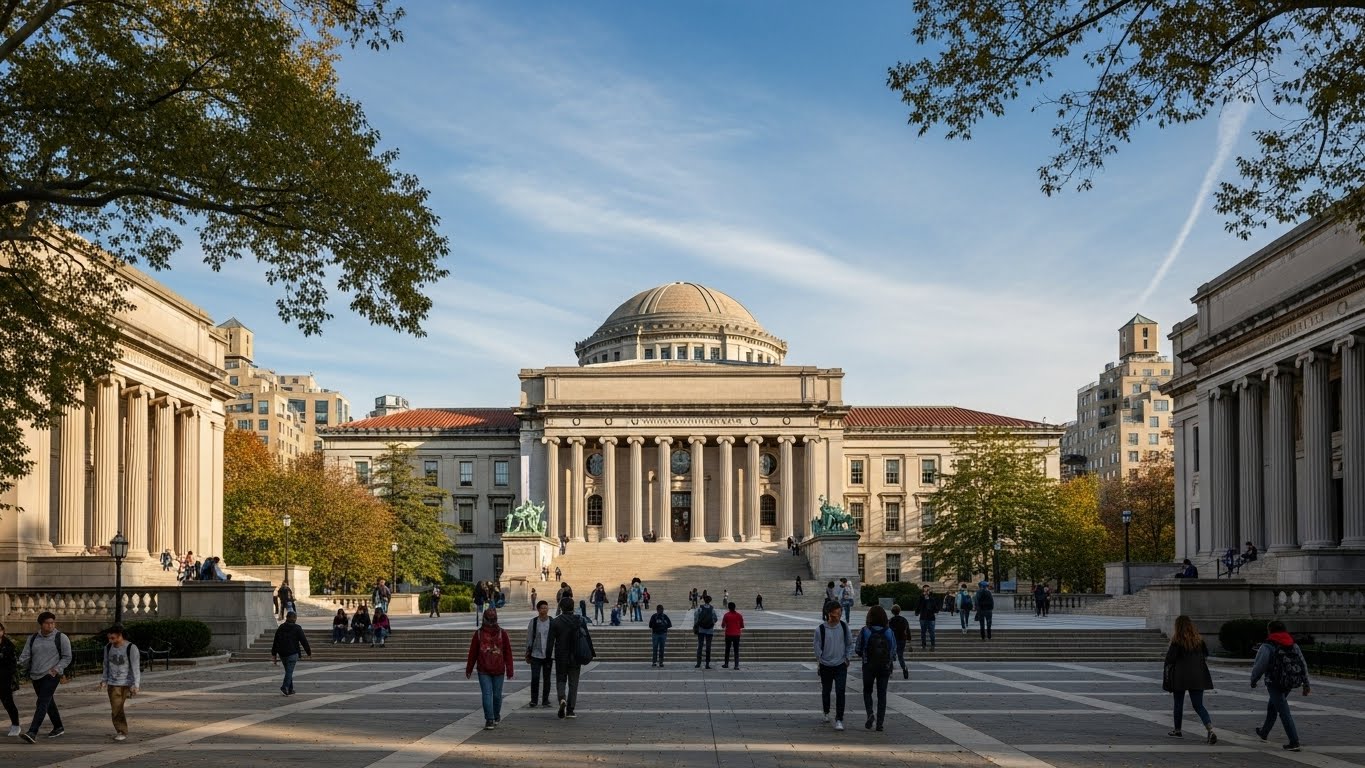
[Columbia University] A Parent’s Guide to Your Child’s Successful College Admission
A Strategic Roadmap to Overcoming the 3.99% Acceptance Rate
Columbia University is one of the colleges that parents ask about most frequently when preparing for their children’s college admissions. Located in the heart of Manhattan, New York City, this prestigious institution is among the most selective universities in the world, with an acceptance rate of just 3.99% as of 2024.
Interestingly, just 30 years ago in 1992, the acceptance rate was 32%—more than eight times higher than it is today. This dramatic shift reflects the explosive growth in global interest in Columbia.
Drawing on 23 years of experience in college admissions consulting, I would like to provide practical and concrete preparation strategies for parents and students aiming for admission to Columbia University.
1. What Kind of University Is Columbia?
Founded in 1754, Columbia University is the fifth-oldest institution of higher learning in the United States. Located in the Morningside Heights neighborhood of Manhattan, New York City, it offers students a unique environment to achieve academic excellence at the epicenter of global finance and culture.
A look at Columbia’s alumni roster reveals the university’s stature: former President Barack Obama, Nobel laureate in Economics Warren Buffett (Columbia Business School), Supreme Court Justice Ruth Bader Ginsburg, and Harlem Renaissance poet Langston Hughes. Columbia has produced world leaders across diverse fields including politics, economics, law, and the arts.
2. Current Admission Statistics and Requirements
2024-2025 Admission Statistics
For the 2024-2025 academic year, 60,115 students applied and 2,400 were admitted. The overall acceptance rate was 3.99%, with Regular Decision acceptance dropping to just 2.8%. In contrast, the Early Decision acceptance rate ranged between 10-15%, making it relatively more favorable.
Advice for Parents: If Columbia is your child’s top-choice university, I strongly recommend considering Early Decision as a strategic option to increase chances of admission.
Standardized Test Scores
The middle 50% SAT range for admitted students is 1520-1560, and the ACT range is 34-36. Columbia currently maintains a Test-Optional policy, meaning SAT or ACT scores are not mandatory. However, it’s worth noting that approximately 70-75% of admitted students chose to submit test scores. Students with competitive scores may benefit from submitting them.
GPA Standards
94% of admitted students ranked in the top 10% of their high school graduating class, with an average weighted GPA of approximately 4.18.
3. Evaluation Factors Columbia Values
Columbia employs a holistic review process in student selection. This means the admissions committee evaluates multiple factors comprehensively, rather than focusing solely on grades and test scores.
Academic Factors
- Rigor of High School Curriculum: Columbia evaluates how actively students pursued the most challenging courses offered at their school (AP, IB, Honors).
- Academic GPA: Maintaining high grades even in challenging courses is essential.
- Application Essays: Columbia’s supplemental essays are particularly demanding. This year, applicants must complete one list question and six short-answer essays.
- Letters of Recommendation: Strong, personalized recommendations from teachers who know the student well are highly valued.
Non-Academic Factors
Character and personal qualities are highly valued. Columbia seeks students with strong intellectual curiosity who can contribute to the community.
4. Understanding the Core Curriculum
If you’re preparing to apply to Columbia, you must understand the Core Curriculum. Established in 1919 as America’s first general education program, all Columbia College students must complete these Core courses regardless of their major.
Key Core Courses
- Literature Humanities (one year): Students read and discuss masterworks of Western literature, from Homer’s Iliad to Toni Morrison’s works.
- Contemporary Civilization (one year): Students explore political philosophy and ethics from Plato to W.E.B. Du Bois.
- Additional Core courses include Art Humanities, Music Humanities, Frontiers of Science, and University Writing.
The essence of the Core Curriculum lies in its small seminar format. Rather than professors lecturing from a podium, students and faculty sit together at a table engaging in discussion.
Important Note: Demonstrating understanding of and interest in the Core Curriculum in your supplemental essays is highly effective. Help your child thoroughly understand and genuinely connect with this educational philosophy in advance.
5. Recommended High School Curriculum
Columbia recommends the following high school curriculum: 4 years of English, 4 years of Mathematics, 4 years of Science, 4 years of Foreign Language, 2 or more years of Social Studies, and 2 or more years of History.
What matters most is not simply taking basic courses, but actively pursuing advanced coursework such as AP, IB, or Honors levels. For students interested in STEM fields, consider courses like AP Calculus BC, AP Physics C, and AP Chemistry. For those interested in humanities, consider AP English Literature, AP U.S. History, and AP European History.
Columbia places significant weight on whether students have chosen the most challenging courses available at their school.
6. Extracurricular Activities and Leadership
Columbia values extracurricular activities and leadership experience as much as academic achievement. Given New York City’s urban environment, interest in and engagement with social issues can be viewed positively.
Types of Extracurricular Activities Columbia Favors
- Community Service and Social Issue Engagement: Running tutoring programs for underprivileged students or leading environmental protection campaigns.
- Academic Clubs and Competitions: Science Olympiad, Math competitions, Debate team, and Model United Nations are highly regarded.
- Creative Arts Activities: With Art Humanities and Music Humanities in the Core Curriculum, activities demonstrating genuine interest in the arts can make a positive impression.
- Research Experience: University lab internships or independent research projects during high school effectively demonstrate academic passion.
On Leadership: Simply holding titles like club president or vice president isn’t what matters. What counts is what you actually accomplished in those roles.
7. Supplemental Essay Analysis and Strategies
Columbia’s supplemental essays are a crucial part of the application process. For the 2025-2026 application cycle, there are six questions in total.
Question 1 (List Question, 100 words or fewer)
This question asks you to list books, journals, websites, podcasts, or other resources that have contributed to your intellectual development outside of school. You must answer in list format, selecting diverse resources that showcase your interests and individuality.
Question 2 (150 words or fewer)
This prompt asks you to describe an important aspect of your life or experience and how it has shaped the way you would learn and contribute in Columbia’s multidimensional, collaborative environment. Share your unique background or experience authentically.
Question 3
This question asks what question or issue you find most important when students with diverse perspectives live and learn together at Columbia, and why. This is an opportunity to demonstrate your intellectual curiosity and critical thinking abilities.
Question 4
This prompt asks you to describe a situation where you navigated adversity and how you changed as a result. The magnitude of the difficulty matters less than the resilience and growth you demonstrated in overcoming it.
Question 5 (Why Columbia)
This question asks why you’re interested in Columbia. Don’t simply write “because it’s a great school.” You need to specifically mention things you can only experience at Columbia: particular Core Curriculum classes, a professor’s research that interests you, clubs you want to join, and other distinctive offerings.
Question 6
This question asks why you’re drawn to your preferred area of study. Connect why you became interested in that field with how you want to explore it at Columbia.
8. Real Profiles of Admitted Students
Let’s examine the profiles of students who were actually admitted to Columbia to understand what kind of preparation is needed.
Case 1 – Sarah K.
GPA: 3.97 (UW) / 4.72 (W) | SAT: 1550 | AP Courses: 10
As editor-in-chief of her school newspaper for three years, she planned in-depth article series on local community issues. She led English tutoring for students from low-income immigrant families and served as Mock Trial team captain, placing third at the state competition. Her essay addressed the linguistic and cultural conflicts she experienced growing up in an immigrant household.
Case 2 – Michael T.
GPA: 3.92 (UW) / 4.65 (W) | ACT: 35 (Science 36) | AP Courses: 8 (STEM-focused)
As robotics team leader, he won the regional FIRST Robotics Competition. He personally designed and operated a technology education volunteer program at a local senior center. His essay presented his vision of technology as a tool to bridge social gaps.
Case 3 – Jennifer L.
GPA: 4.0 (UW) / 4.85 (W) | SAT: 1540 (Reading 780) | AP Courses: 11 (Humanities/Arts focus)
She served as concertmaster of her school orchestra for four years and led the founding of a local youth orchestra providing free music education to low-income students. Her essay explored how music and art can transcend social boundaries as a universal language.
9. Four-Year High School Preparation Roadmap
9th Grade (Time for Broad Exploration)
Experiencing various clubs and activities to discover your interests is crucial. Academically, build a solid foundation and develop self-directed study habits. Parents should support their children in discovering their own interests.
10th Grade (Narrowing Focus)
Begin focusing on 2-3 areas where you feel genuine passion from your 9th-grade explorations. Start taking AP courses in earnest, and consider participating in meaningful summer programs.
11th Grade (The Most Critical Year)
Take the most challenging curriculum while maintaining high grades. Complete SAT/ACT testing. Achieve leadership roles and meaningful accomplishments in extracurricular activities. Building relationships with teachers who will write your recommendations is important. A campus visit to Columbia is highly recommended.
12th Grade (Completing the Application)
Begin essay writing during summer break. Both the Common App essay and Columbia supplemental essays require sufficient time to revise and develop. Keep the early November deadline in mind for Early Decision applicants. Parents should focus on emotional support and objective feedback rather than writing essays for their children.
Conclusion
We have covered a comprehensive guide to gaining admission to Columbia University. Columbia is not a university that can be gained by outstanding grades alone. The admissions committee seeks students with deep academic inquiry, intellectual curiosity, and a willingness to contribute to the community.
Understanding Columbia’s educational philosophy, exemplified by its Core Curriculum, and demonstrating how it connects with your child’s educational goals is essential. Throughout four years of high school, pursue a challenging academic curriculum while discovering your own passions and making meaningful impact through them.
Don’t be intimidated by an acceptance rate under 4%. With thorough preparation and an authentic application, Columbia is absolutely worth pursuing. I sincerely wish your child success in gaining admission to Columbia University.
Thank you.
For more detailed education and financial aid consulting: Elite Prep Suwanee
www.eliteprep.com/suwanee
We provide personalized strategies tailored to your child’s specific situation.
Andy Lee / Elite Prep Suwanee powered by Elite Open School
1291 Old Peachtree Rd, NW #127
Suwanee, GA 30024
Email: andy.lee@eliteprep.com Tel & text: 470.253.1004
🎥 www.youtube.com/@ElitePrepSuwanee