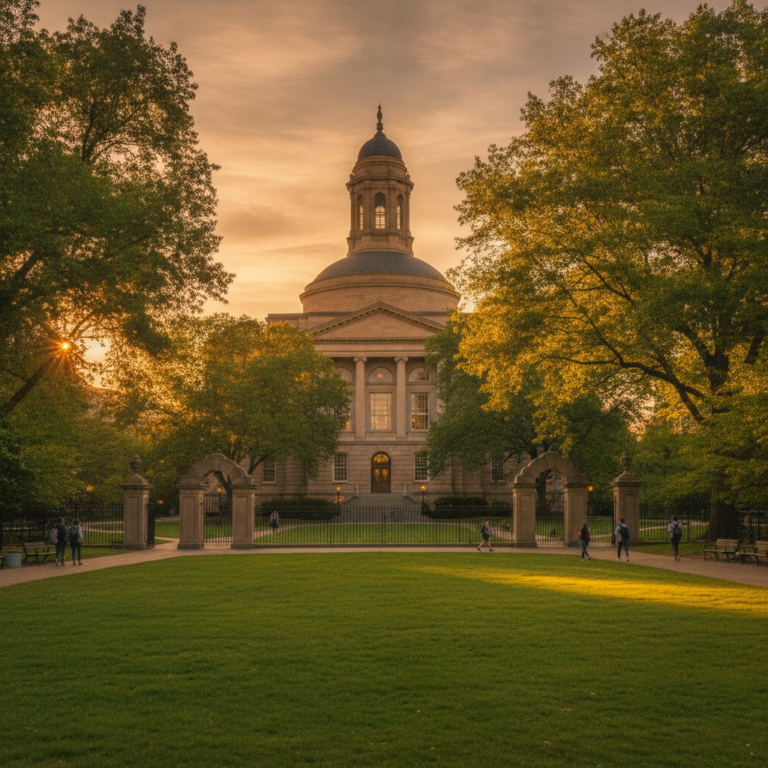
【University of Texas at Austin】Complete Parent Guide for Your Child’s Admission to America’s Top Universities and Financial Aid
“Elevate Your SAT Scores and GPA Simultaneously: The Elite Advantage.”
Summer 2026 marks a paradigm shift in SAT preparation. The era of camps that focus solely on test scores has come to an end. We are proud to introduce the Elite SAT Bootcamp—a groundbreaking program where your coursework is officially recognized as a university-approved, honors-level (AP-equivalent) credit.
By participating in this bootcamp, students do not just prepare for an exam; they actively enhance their high school transcript and see a direct, positive impact on their cumulative GPA. Elite Prep offers the only strategic path to mastering the SAT while simultaneously strengthening your academic standing.
Secure your scores and your GPA in one definitive step. Experience the Elite difference.
“My child wants to major in computer science, and I’ve heard that UT Austin is really good. But since it’s a Texas state university, I’m wondering if it’s somehow inferior to private universities.”
I can tell you this perception is completely wrong. UT Austin is one of the nation’s top public research universities, and particularly in engineering, business, and computer science, it offers programs that surpass those of Ivy League schools. In fact, I’ve seen many Korean students choose UT Austin over Harvard or Stanford.
Today, I’ll provide you with comprehensive information about UT Austin from the perspective of Korean-American parents.
1. Basic Information
| Category | Information |
|---|---|
| Founded | 1883 |
| Total Enrollment | Approximately 51,000 students (40,000 undergraduates) |
| Location | Austin, Texas |
| Campus Size | 431 acres |
| Student-Faculty Ratio | 18:1 |
| School Colors | Burnt Orange, White |
| Mascot | Longhorn (Bevo) |
| Korean Student Population | Approximately 1,800 students (as of 2024) |
Founding History: UT Austin was established in 1883 under the Texas Constitution as the flagship university of the University of Texas System. Famous for its motto “What starts here changes the world,” the university has achieved countless innovations and discoveries over its 140+ year history. Since the 1960s, it has grown rapidly as a research-focused institution and is now recognized as one of America’s premier public research universities.
2. Rankings
Overall University Rankings (2024)
| Ranking Organization | Overall Rank | Public University Rank |
|---|---|---|
| US News & World Report | 32nd | 7th |
| Forbes | 47th | 13th |
| QS World University Rankings | 58th | – |
Major Program Rankings (2024 US News)
| Academic Field | Ranking |
|---|---|
| Computer Science | 10th |
| Engineering | 11th |
| Business | 5th |
| Accounting | 1st |
| Petroleum Engineering | 1st |
| Journalism | 4th |
| Education | 9th |
3. Major Schools and Colleges
🏫 Cockrell School of Engineering
This is UT Austin’s pride and one of the nation’s most outstanding engineering schools. Petroleum engineering maintains its #1 national ranking, while computer science and electrical and computer engineering are also top-tier. This is the college that Korean students apply to most frequently.
💼 McCombs School of Business
Ranked 5th among America’s business schools, this is a premier business institution. The accounting program has consistently held the #1 national ranking. Career placement on Wall Street is also very active.
🔬 College of Natural Sciences
This college demonstrates strong research capabilities in fundamental sciences including mathematics, physics, chemistry, and biology. It’s particularly popular among pre-med students and has excellent medical school acceptance rates.
🎭 College of Liberal Arts
A prestigious institution in humanities and social sciences, with particularly renowned programs in political science, economics, and psychology. Many students planning for law school choose this college.
📺 Moody College of Communication
This college maintains top national rankings in journalism, advertising, and broadcast studies. It has very strong connections with the media industry.
4. Admissions Information
Acceptance Rates and Academic Profile (2024)
| Category | Statistics |
|---|---|
| Overall Acceptance Rate | 31% |
| Out-of-State Acceptance Rate | 10-12% |
| SAT Middle 50% (Total) | 1350-1510 |
| ACT Middle 50% | 31-35 |
| Average GPA | 3.84 (Unweighted) |
| Top 10% Class Rank | 74% |
Important: UT Austin applies the Top 6% Rule for Texas residents. Texas high school graduates ranking in the top 6% of their class are automatically admitted. However, out-of-state and international students don’t receive this benefit, making competition much more intense.
Application Timeline (2024-2025)
| Application Type | Deadline | Decision Release |
|---|---|---|
| Regular Decision | December 1 | March 1 |
| Early Action | October 15 | February 1 |
Essay Requirements
UT Austin requires the following essays:
- Topic A (Required): Describe your background, identity, interests, and talents, and explain how these will contribute to the UT Austin student community (maximum 700 words)
- Choose 1 from Topics B, C, D: Essay on leadership experience, academic/extracurricular goals, or solving social issues (maximum 500 words)
- Short Answer: Reason for major choice (maximum 300 words)
5. Costs and Financial Aid
Estimated Costs for 2024-2025 Academic Year
| Category | Texas Residents | Out-of-State/International |
|---|---|---|
| Tuition | $11,698 | $42,778 |
| Room and Board | $13,456 | $13,456 |
| Books and Supplies | $1,000 | $1,000 |
| Other Expenses | $3,500 | $3,500 |
| Total Cost | $29,654 | $60,734 |
Financial Aid Programs
Texas Advance Commitment: Texas resident students with family incomes of $65,000 or less receive full tuition coverage. Those with incomes of $125,000 or less can also receive substantial aid.
- Merit-based Scholarships: Students with outstanding academic performance and leadership receive $1,000-$13,000 annually
- Need-based Aid: Federal and state aid provided based on FAFSA
- Work-Study Programs: On-campus employment opportunities
- International Student Aid: Limited merit scholarships and departmental scholarships available
6. Campus Life
📍 Location and Transportation
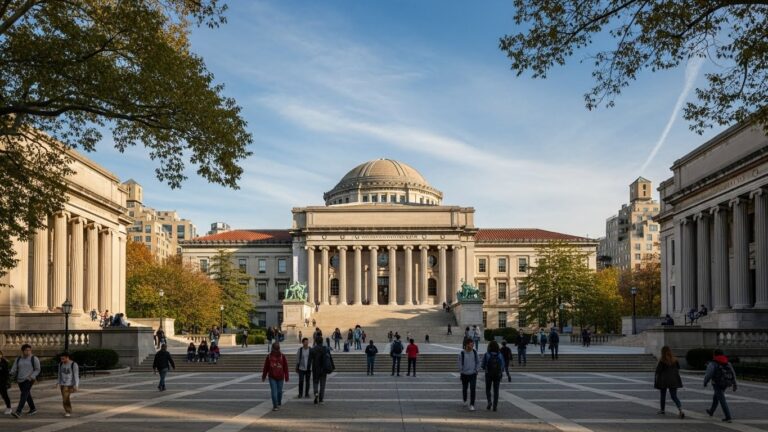
UT Austin is located in downtown Austin, the capital of Texas. Austin, famous for “Keep Austin Weird,” is a vibrant city with thriving music, technology, and food cultures. The campus is within walking distance of downtown, and public transportation is well-developed.
🏢 Major Buildings and Facilities
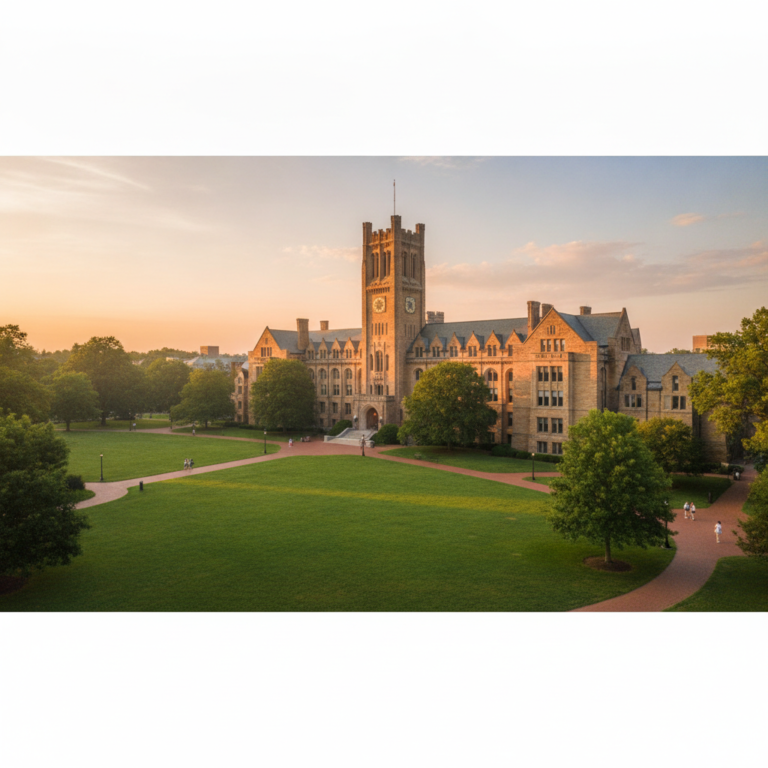
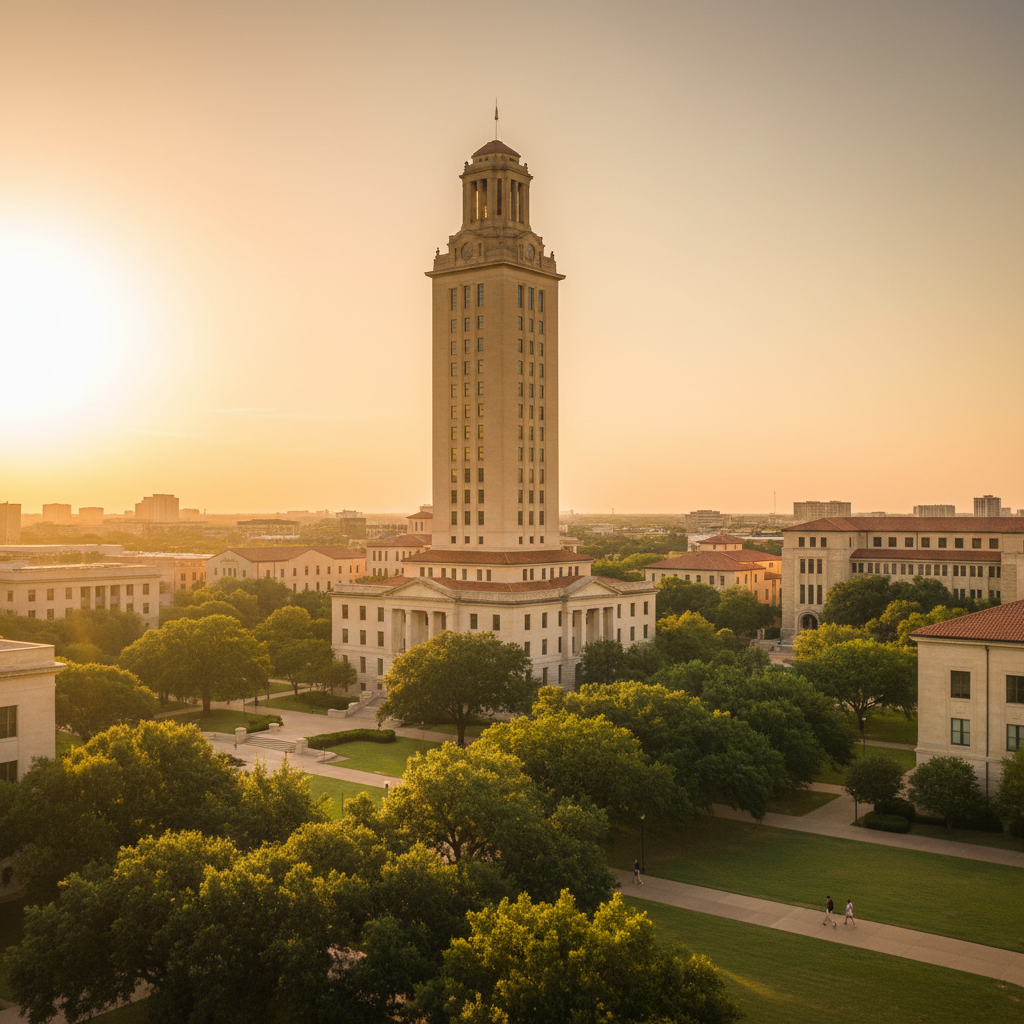
- Main Tower: UT’s iconic building, a landmark visible from anywhere on campus
- Perry-Castañeda Library: The main library operating 24 hours
- Student Activity Center: Central space for various student activities and events
- Frank Erwin Center: Arena hosting major concerts and sporting events
- Dell Computer Science Hall: State-of-the-art computer science facilities
🎭 Student Activities
UT Austin has over 1,300 student organizations, allowing students with diverse interests to participate:
- Korean Student Association: Active Korean community operations
- Academic Clubs: Professional societies and research groups for each major
- Service Organizations: Community service activities in the Austin area
- Cultural Organizations: Groups for students from diverse cultural backgrounds
🏈 Sports
UT Longhorns are members of the Big 12 Conference, with football and basketball being particularly famous. Football games at Darrell K Royal-Texas Memorial Stadium draw over 100,000 spectators, creating a spectacular atmosphere. The “Hook ’em Horns” cheering culture is a source of Texas pride.
🏠 Residence Hall Life
First-year students are encouraged to live in residence halls, with various housing options available:
- Residence Halls: Traditional dormitory-style housing
- Learning Communities: Housing for students with similar interests or majors
- Honors Communities: Special programs for high-achieving students
7. Career and Employment
Post-Graduation Outcomes (2023 Graduates)
| Academic Field | Employment Rate | Average Starting Salary |
|---|---|---|
| Computer Science | 96% | $95,000 |
| Engineering | 94% | $78,000 |
| Business | 92% | $72,000 |
| Overall Average | 89% | $65,000 |
Major Employers
Major companies where UT Austin graduates frequently find employment:
- Technology: Google, Microsoft, Apple, Facebook, Amazon, Dell, IBM
- Consulting: McKinsey & Company, Boston Consulting Group, Deloitte
- Finance: Goldman Sachs, JP Morgan Chase, Bank of America
- Energy: ExxonMobil, Chevron, Shell, BP
- Aerospace: NASA, SpaceX, Lockheed Martin, Boeing
Graduate School Admission
Approximately 25% of graduates pursue graduate studies annually. Medical school, law school, MBA, and doctoral program admission rates are particularly high, with many students attending UT Austin’s own graduate programs or other prestigious graduate schools.
Career Services: UT Austin provides robust career support services. Annual career fairs attract over 800 companies, and the university offers free services including one-on-one career counseling, resume assistance, and mock interviews.
8. Five Common Misconceptions Korean Parents Have
❌ Misconception 1: “Public universities are inferior to private universities”
Reality: UT Austin offers programs that surpass those of Ivy League universities in many fields. Engineering, business, and computer science are particularly top-tier nationally, and research funding and facilities far exceed most private universities.
❌ Misconception 2: “Only Texas students can get in”
Reality: While the top 6% automatic admission applies only to Texas residents, about 10% of all students are out-of-state and international students. Many Korean students from other states have successfully gained admission to UT Austin.
❌ Misconception 3: “The school is too large to receive individual attention”
Reality: While large, this means more opportunities and resources are available. Through Honors Programs, small seminars, and research opportunities, students can form close relationships with professors.
❌ Misconception 4: “It’s a party school with poor academic atmosphere”
Reality: While social activities are vibrant, academic excellence is also very high. Many students successfully balance academics and social activities, achieving outstanding results after graduation.
❌ Misconception 5: “The network isn’t as good as East Coast elite universities”
Reality: UT Austin’s alumni network is particularly strong in the Southwest region and in energy and technology industries. Active alumni activities occur in major cities like Silicon Valley, Houston, Dallas, and Austin.
9. Five Unique Distinguishing Features of UT Austin
① “What Starts Here Changes the World” Spirit
UT Austin pursues innovation that changes the world beyond simple learning. Many graduates have made significant impacts on society as entrepreneurs, politicians, and scientists. This culture inspires students to dream big and develop a challenging spirit.
② Austin’s Unique Urban Environment
Austin is a creative and liberal city famous for the slogan “Keep Austin Weird.” World-class festivals like South by Southwest (SXSW) and Austin City Limits take place here, and many startups and technology companies have earned it the nickname “Silicon Hills.” This environment provides students with unique cultural experiences and internship opportunities.
③ Texas Pride and Culture
From “Hook ’em Horns” cheers to Texas BBQ and cowboy culture, UT Austin proudly celebrates Texas’s unique identity. This strong school pride gives students a sense of belonging and leads to lasting alumni bonds that continue after graduation.
④ Opportunities as a Research-Centered University
UT Austin is a major research institution receiving over $700 million annually in research funding. Undergraduates can easily participate in research projects, and many students publish papers with professors or file patents. These experiences greatly help with graduate school admission or employment.
⑤ Diversity and Inclusivity
UT Austin boasts one of the most diverse student bodies in America. Students from Hispanic, Asian, African, and other various backgrounds come together, fostering a global mindset. The Korean student community is particularly active, helping with adaptation.
10. Real Korean Student Admission Cases
Case 1: Computer Science Admission – J.K. Student
Academic Performance:
- GPA: 3.89 (Unweighted) / 4.67 (Fully Weighted)
- SAT: 1520 (English 750, Math 770)
- AP Courses: Total 12 (AP Computer Science A, AP Calculus BC, AP Physics C, AP Chemistry, AP Statistics, AP English Language, AP English Literature, AP US History, AP World History, AP Spanish, AP Art History, AP Human Geography)
- AP Scores: Ten 5s, Two 4s
Extracurricular Activities:
- 9th Grade: Math Honor Society, Robotics Club member, local library volunteer (4 hours/week)
- 10th Grade: Robotics Club Team Leader, programming contest participation, coding tutoring volunteer
- 11th Grade: Computer Science Club president, USACO Gold Division qualifier, local tech startup intern
- 12th Grade: Student government vice president, National Merit Semifinalist, personal app development project
Special Achievement: During COVID-19, developed an online shopping assistance app for elderly people that was featured in the local newspaper. This app was actually used by over 500 seniors.
Case 2: McCombs Business School Admission – S.L. Student
Academic Performance:
- GPA: 3.92 (Unweighted) / 4.58 (Fully Weighted)
- ACT: 34 (English 35, Math 34, Reading 33, Science 34)
- AP Courses: Total 10 (AP Calculus BC, AP Statistics, AP Economics (Macro/Micro), AP Psychology, AP English Language, AP English Literature, AP US History, AP World History, AP Spanish Language)
- Dual Enrollment: 4 business-related college courses
Extracurricular Activities:
- 9th Grade: DECA member, Youth Volunteer Corps participation, local food bank volunteer
- 10th Grade: DECA State competition qualifier, Junior Achievement program participation, assistance with parents’ business
- 11th Grade: DECA regional competition winner, Model UN delegate, small online store startup
- 12th Grade: DECA national competition Top 10, National Honor Society president, online store achieved $50,000 annual revenue
Special Achievement: The K-beauty product online sales business started in 11th grade succeeded in achieving $50,000 in annual revenue by graduation. The essay based on this experience was very impressive.
11. Preparation Strategy by Grade Level
🎯 Middle School (Grades 6-8)
- Strengthen math skills (consider early enrollment in Algebra I, Geometry)
- Improve English reading/writing abilities
- Experience diverse extracurricular activities
- Learn basic computer programming
📚 9th Grade (Freshman)
- Build good GPA foundation while adapting to high school
- Begin taking Honors courses
- Start club activities related to areas of interest
- Begin volunteer work (50-100 hours annually)
- Take PSAT 8/9 to assess current abilities
📖 10th Grade (Sophomore)
- Take first AP courses 2-3 subjects (AP World History, AP Human Geography, etc.)
- Take PSAT 10
- Participate in summer programs related to areas of interest
- Begin taking leadership roles in club activities
- Begin SAT Subject Test preparation (if applicable)
🎓 11th Grade (Junior) – Most Important Year
- Take most challenging AP courses (5-7 subjects)
- Take PSAT/NMSQT (aiming for National Merit)
- First SAT or ACT attempt (March/May)
- Participate in summer internships or research programs
- Begin college visits
- Build relationships with teachers for recommendation letters
🏆 12th Grade (Senior)
- Continue AP courses but avoid overload
- Retake SAT/ACT if necessary (through October)
- Prepare early decision applications (November 1 Priority Deadline)
- Write and refine essays
- Request recommendation letters (at least 2-3 months in advance)
- Complete scholarship applications
Detailed Checklists for 11th-12th Grades
✅ 11th Grade Checklist
| Timeline | Tasks |
|---|---|
| September | • Establish time management system with start of school year • Plan college visits • Begin serious SAT/ACT preparation |
| October | • Take PSAT/NMSQT • First college visits • Strengthen leadership activities |
| November-December | • Consider first SAT/ACT attempt • Plan winter break activities (volunteering, internships) • Deepen relationships with teachers for recommendation letters |
| January-February | • Create initial college list • Participate in various competitions • Apply for spring break programs |
| March-May | • Take SAT/ACT • Prepare for AP exams • Finalize summer programs |
| June-August | • Participate in summer internships/research programs • Brainstorm and draft essays • Continue college visits |
✅ 12th Grade Checklist
| Timeline | Tasks |
|---|---|
| August | • Create Common Application account • Begin serious essay writing • Request recommendation letters (at least 3 months in advance) |
| September | • Finalize college list • Complete first draft of essays • Final SAT/ACT attempt (if needed) |
| October | • Prepare for UT Austin Priority Deadline • Final essay revisions • Check recommendation letter progress |
| November 1 | • Submit UT Austin Priority Deadline application |
| November-December | • Apply to other universities Regular Decision • Complete scholarship applications • Prepare Mid-year Report |
| January-March | • Await admission decisions • Submit FAFSA and financial aid documents • Maintain final semester grades |
Important Note: For UT Austin, missing the Priority Deadline (November 1) significantly reduces admission chances. Especially for highly competitive majors, the Priority Deadline must be met.
Conclusion
UT Austin provides world-class education and research opportunities while offering the best value at a relatively reasonable cost. Like the motto “What Starts Here Changes the World,” students who study here are actually achieving innovations that change the world.
Students who are a good fit for UT Austin include:
- Students with excellent academic ability combined with leadership
- Proactive students who can find their own opportunities in a large-scale environment
- Students who want to grow while interacting with people from diverse cultures and backgrounds
- Students with big dreams and passion to change the world
- Students who can enjoy Texas’s unique and liberal culture
From my 30 years of experience sending many Korean students to UT Austin, I can tell you this university is one of the best choices to make your child’s dreams a reality. While preparation should start as early as possible, a systematic and strategic approach is most important.