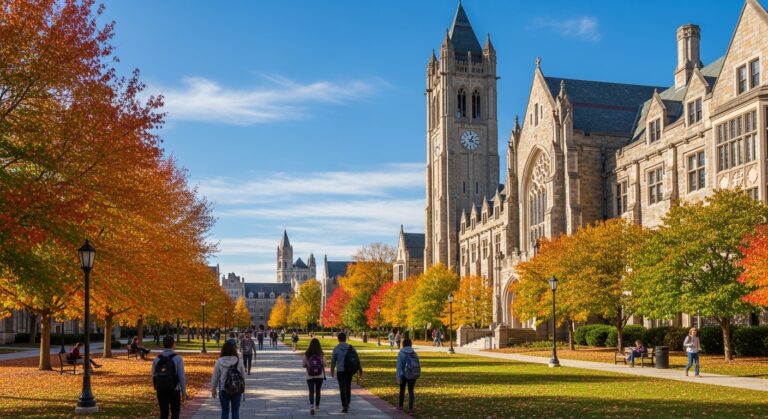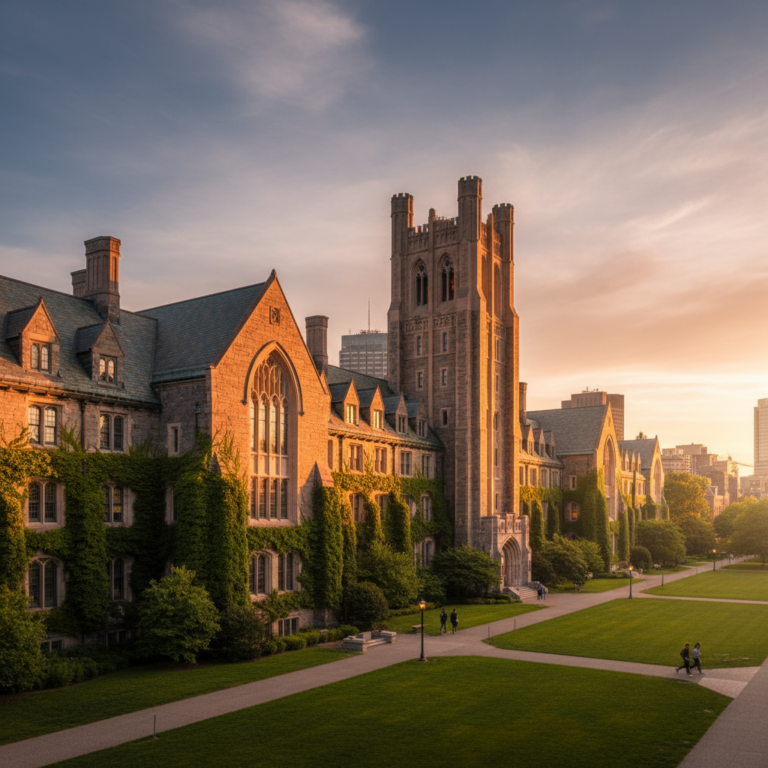
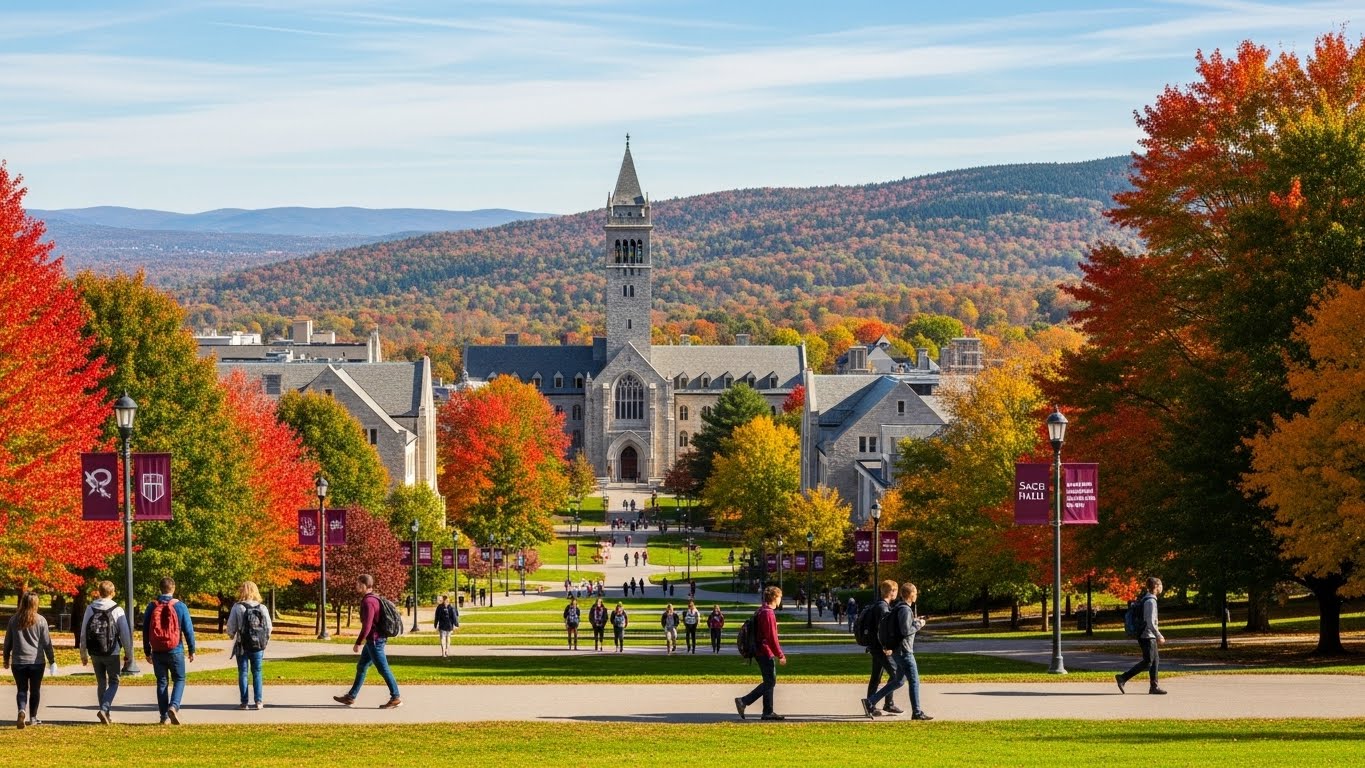
Cornell UniversityA Parent’s Guide to Your Child’s Successful Admission to a Top U.S. University
This column was written for Korean parents whose children attend high school in the United States. It explains, in concrete terms, what students should do throughout high school to aim for admission to a top-tier U.S. university. It offers practical strategies grounded in recent admissions data and concludes with sample admitted-student profiles to help families understand what four years of preparation can look like. In this article, we focus on Cornell University and hope it will be helpful to your family.
1. Introduction
Cornell University is a private Ivy League university located in Ithaca, New York. It is widely respected across many fields—engineering, life sciences, business, architecture, and the humanities and social sciences—among others. Guided by its well-known spirit of “Any person, any study,” Cornell values interdisciplinary learning and real-world impact, seeking students who will lead and contribute meaningfully to society.
To be competitive for Cornell, students typically need not only strong academic performance but also broad perspective, collaborative mindset, leadership, and the ability to communicate a compelling personal story through essays. Cornell evaluates applicants holistically, so families should plan for both academic excellence and purposeful personal development throughout high school.
2. Admissions Statistics and Application Requirements
a. Recent Admissions Statistics (Common Data Set summary, 2023 entry)
Based on Cornell’s 2023 Common Data Set:
- Total applicants (First-time, first-year, degree-seeking): 67,846
- Admitted: 5,358
- Enrolled: 3,537
- In-state: 1,148
- Out-of-state: 2,031
- International: 358
- Acceptance rate: approximately 7.9%
- Standardized test submission (optional at the time):
- SAT submitted: 42% (about 1,481 students)
- ACT submitted: 14% (about 492 students)
- SAT middle 50% (25th–75th percentile): 1480–1550
- ACT middle 50% (25th–75th percentile): 33–35
Cornell had been operating under a test-optional policy, meaning applicants could choose whether to submit scores. However, Cornell has announced that starting with Fall 2026 entry, the policy will shift to test-required.
Additional student success indicators:
- First-year retention rate: 98%
- Six-year graduation rate: 95%
Cornell also uses a waitlist. In 2023:
- Offered waitlist: 8,282
- Accepted a place on waitlist: 6,166
- Admitted from waitlist: 362
These numbers demonstrate just how competitive Cornell is—and why strong preparation in both academics and non-academic areas is essential during high school.
3. Basis for Selection: Relative Importance of Factors in Admission Decisions
Cornell uses holistic review, meaning it evaluates applicants using multiple factors rather than relying only on GPA and test scores.
a. Academic Factors
Very Important
- Strength and rigor of high school coursework
- Academic GPA
- Application essay
- Recommendations
Important
- Standardized test scores (SAT/ACT)
- Advanced coursework performance (AP/IB/Honors, etc.)
b. Non-Academic Factors
- Character and personal qualities
- Extracurricular activities, leadership, community engagement
- Personality, values, and passion conveyed through essays
Cornell often looks for students who demonstrate intellectual curiosity and a willingness to contribute to communities, along with strong collaboration and leadership potential.
4. Academic Preparation
a. Recommended High School Curriculum
Cornell generally encourages students to pursue a challenging and well-rounded high school program. Typical recommended preparation includes:
- English: 4 years
- Mathematics: at least 4 years (ideally through Calculus or beyond)
- Science: 4 years (balanced across physics, chemistry, biology when possible)
- Social Studies: 2–3 years
- History: 2–3 years
- Foreign Language: 3–4 years
If available, students should consider AP, IB, Honors, and Dual Enrollment courses to demonstrate academic rigor and readiness.
b. Academic Qualities Cornell Values
- Intellectual curiosity
- Not just studying for tests, but genuinely enjoying learning and exploring topics more deeply.
- Critical and creative thinking
- The ability to connect ideas across subjects and approach problems in innovative ways.
- Research and project experience
- Even at the high school level, Cornell values small-scale research, team projects, data analysis, experiments, and presentations.
c. Application Requirements
- Apply via Common App or Coalition App
- SAT/ACT: required starting Fall 2026
- Official high school transcripts
- Recommendations
- 2 teacher recommendations required
- 1 teacher recommendation optional
- Other recommenders: up to 3 optional
- Essays
- Personal statement + Cornell Writing Supplement
Cornell pays close attention to essays and recommendations to understand the applicant’s intellectual motivation, resilience, and character.
5. Extracurricular Activities and Leadership
a. Types of Activities Cornell Values
Cornell tends to favor students who show sustained passion and growth through their activities, such as:
- Academic clubs and competitions
- STEM, math, economics, business, engineering projects, Olympiads, and awards
- Research internships / research service
- Participation in labs, universities, institutes, or structured online research projects
- Community service and civic contribution
- Long-term service, social enterprise work, NGO involvement, and problem-solving leadership
- Arts, culture, and creative work
- Music, visual arts, performance, writing, and interdisciplinary creative projects
- Leadership and teamwork
- Club officer roles, student government, event leadership, and team-based initiatives
b. Why Leadership Matters
- Leadership doesn’t require a large organization—leading a meaningful project can be equally powerful.
- Admissions officers value impact and growth, not just titles.
- Experiences showing collaboration, conflict resolution, and effective teamwork align strongly with Cornell’s preferred student profile.
6. Financial Aid and Scholarships
a. Financial Aid Policies
- Cornell primarily provides need-based financial aid.
- Aid eligibility can differ based on citizenship status (U.S. citizens/permanent residents vs. international students).
- Merit-based scholarships are limited, consistent with typical Ivy League policies.
- Cornell also offers opportunities like work-study programs to help reduce student burden.
b. Application Process and Key Timing
- Submit FAFSA and CSS Profile
- U.S. citizens/permanent residents typically submit between October and January, depending on the school’s deadlines.
- Use Cornell’s Net Price Calculator to estimate potential costs and aid.
- Be prepared for additional documentation (income verification, tax forms, etc.) and maintain close communication with Cornell’s financial aid office if needed.
7. Additional Reference: Three Sample Admitted Student Profiles
The profiles below are illustrative examples designed to help families visualize what strong preparation might look like.
Student Profile 1: Sophie
- GPA: 3.96 (Unweighted), 4.72 (Weighted)
- SAT: 1530 (Math 770, Reading/Writing 760)
- Coursework:
- AP Calculus BC, AP Biology, AP Chemistry, AP Literature (13 AP courses total)
- 4 Dual Enrollment engineering courses at a local community college
- Activities:
- Led a science research project; competed nationally; placed 1st locally and 2nd at the state level
- Founded a girls’ STEM mentoring club; organized monthly “Women in STEM” speaker series
- Choir leadership; organized community performances and fundraising concerts
- Leadership:
- Science department student leader; built a lab safety training program for freshmen
- Vice president of a service club; partnered with a local animal shelter
- Essay theme:
- “Scientific discovery and social impact—small experiments that change communities”
Student Profile 2: Daniel
- GPA: 3.90 (Unweighted), 4.65 (Weighted)
- ACT: 34 (Math 35, Science 34, Reading 33, English 33)
- Coursework:
- AP Physics C: Mechanics, AP U.S. History, AP English Language
- AP Computer Science and robotics-linked coursework
- 15 AP/college-level courses total
- Activities:
- Vice president of robotics team; 2nd place at state competition; won design award
- Participated in an agricultural innovation project using drones; secured county grant funding
- Led International Club; organized cultural festival and “Diversity Week”
- Leadership:
- Ran weekend coding classes for local elementary students
- Led Model UN delegation to a national conference
- Essay theme:
- “Connecting technology to human life—robotics solutions for sustainable agriculture”
Student Profile 3: Emily
- GPA: 4.0 (Unweighted), 4.80 (Weighted)
- SAT: 1490 (Math 750, Reading/Writing 740)
- Coursework:
- AP Statistics, AP Environmental Science, AP World History, AP Spanish
- AP Seminar/Research; completed and submitted a research paper
- Activities:
- Editor-in-Chief of literary magazine; mentored student writers; led writing workshops
- Founded Social Entrepreneurship club; provided social media consulting for local small businesses
- Launched mental health awareness campaign with counselors: “Mindful Mondays”
- Leadership:
- Student Council officer; organized “Mental Health Awareness Week”
- Led community center volunteering; ran reading classes for low-income students
- Essay theme:
- “Revitalizing communities through communication and storytelling”
8. Cornell Supplementary Essay (1 Prompt) & High School 4-Year Master Plan
Prompt (Max 350 words)
We all contribute to, and are influenced by, the communities that are meaningful to us. Share how you’ve been shaped by one of the communities you belong to.
Remember that this essay is about you and your lived experience. Define community in the way that is most meaningful to you. Some examples of community you might choose from are: family, school, shared interest, virtual, local, global, cultural.
1) Understanding the Prompt
This essay asks students to show how a meaningful community has shaped who they are. It is not enough to say, “I belong to this community.” The essay must explain:
- How the student has grown within the community
- What they learned, what values they developed
- How they contributed and interacted with others
- A specific lived experience that reveals identity, personality, and growth
Admissions officers want to understand the student’s character and development through real experiences, not vague statements.
2) How to Prepare Over Four Years of High School
9th Grade (Exploration)
- Try multiple activities and communities: clubs, service, academic groups, arts, online communities
- The goal is exploration—finding where the student feels meaning and growth
Parent role: Encourage experimentation without pressure; make it safe to try and to quit if it’s not a fit.
10th Grade (Deepening Interests)
- Identify 1–2 communities that feel genuinely meaningful
- Participate more actively; begin keeping records of experiences and reflections
Parent role: Support logistics and ask open-ended questions like: - “What did you learn today?”
- “What changed because you were involved?”
11th Grade (Leadership and Impact)
- Take on real responsibility—officer roles, project leadership, or initiating a new program
- Build strong stories through problem-solving, collaboration, and tangible results
Parent role: Help maintain balance between academics and activities; support time management and mental health.
12th Grade (Essay Development and Completion)
- Use the accumulated reflections to draft the essay early
- Emphasize specific events, personal transformation, and the lessons learned
Parent role: Provide objective feedback: Is it concrete? Is it authentic? Does it show growth, not just accomplishments?
3) Additional Tips for a Strong Essay
- Choose a community that is genuinely meaningful
- A small community can be more powerful than an “impressive” one if it is authentic.
- Use concrete episodes
- Dialogue, turning points, conflict resolution, decisions, and emotions make the student real.
- Center the student’s internal change
- The best ending leaves the reader thinking:
“This student truly grew—and can bring that same energy to Cornell.”
- The best ending leaves the reader thinking:
9. Conclusion
This prompt offers a strong opportunity to show how a student has grown within a community and how that experience shaped identity and values. The best outcomes happen when students:
- explore communities broadly early on,
- deepen involvement and impact over time,
- and connect their experiences into a coherent narrative by senior year.
Parents can help most by supporting meaningful exploration, encouraging reflection, and keeping the process balanced and sustainable.
If your child follows these steps steadily over four years, the result will be more than an admissions strategy—it will be a genuine growth journey that benefits them well beyond college applications.0
Thank you.
If you have any questions about your child’s college admissions journey, please feel free to contact us anytime.
www.eliteprep.com/contact-us
Andy Lee / Elite Prep Suwanee powered by Elite Open School
1291 Old Peachtree Rd, NW #127
Suwanee GA, 33024
470.253.1004
andy.lee@eliteprep.com
eliteprep.com/suwanee
www.youtube.com/@andyssamTV