
[Columbia University] A Complete Financial Aid Guide for Parents
Dear Respected Parents,
Greetings. As a professional who has worked in the field of U.S. college financial aid for over 20 years, I would like to clearly and thoroughly explain the financial aid system of Columbia University, one of the most prestigious Ivy League institutions.
One of the greatest sources of misunderstanding and anxiety in the U.S. college admissions process is the issue of tuition cost. The published price of private elite universities like Columbia may appear overwhelmingly high. However, the most important point parents must understand is that these numbers represent not an actual bill, but a potential investment cost. In particular, Columbia University operates a very strong financial aid policy to ensure that students’ economic backgrounds do not determine their educational opportunities.
1. The Core Principle of Columbia’s Financial Aid: Need-Blind Admission
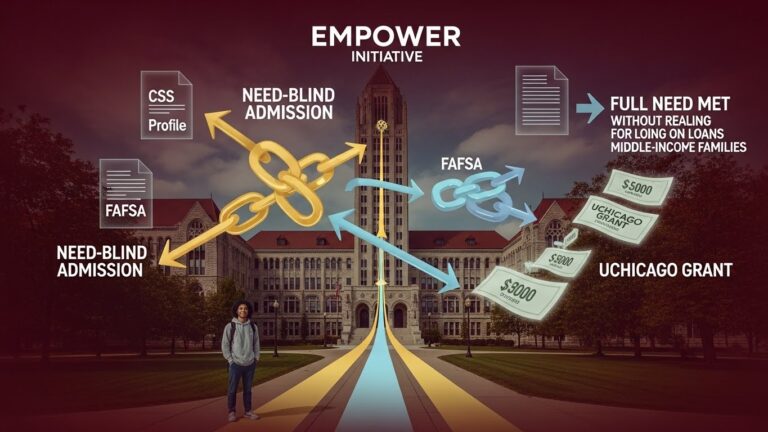
The most important principle parents must understand about Columbia’s admissions process is its Need-Blind Admission policy—meaning that financial need is not considered in admissions decisions.
For U.S. citizens, permanent residents, and certain eligible non-citizens (such as students with refugee status), Columbia does not consider whether an applicant applies for financial aid or how much aid they may need when making admissions decisions. Admissions officers evaluate only academic achievement, potential, and the student’s ability to contribute to the campus community.
Therefore, parents can completely set aside any concern that applying for financial aid might reduce their child’s chances of admission—even by one percent. Columbia selects students based solely on merit, and once admitted, the university is fully committed to making it financially possible for those students to enroll.
This Need-Blind policy is more than a financial promise; it is an ethical commitment to educational access and equity.
However, there is one important exception: for international students, Columbia uses a Need-Aware admissions process, meaning financial need may be considered. That said, Columbia still provides very generous financial aid to international students. For families living in the U.S., however, it is essential to understand that financial aid applications do not affect admission decisions.
2. Columbia’s Financial Aid Guarantee: Meeting 100% of Demonstrated Need
The second pillar of Columbia’s financial aid system is its commitment to meet 100% of demonstrated financial need.
If Columbia determines that a family cannot fully afford the cost of attendance, the university guarantees that it will cover the full amount of the calculated financial need through the aid package.
To understand this, parents should be familiar with the three key components of the financial aid calculation:
A. Cost of Attendance (COA)
COA includes more than just tuition. It represents the total estimated cost for one academic year at Columbia, including:
- Tuition and mandatory fees
- Housing and meal plans
- Books, supplies, transportation, and personal expenses
Columbia publishes this figure annually, and it typically totals many tens of thousands of dollars per year.
B. Expected Family Contribution (EFC) / Student Aid Index (SAI)
This is the amount the family is expected to contribute toward college costs for the year. It is calculated using both federal formulas and Columbia’s own institutional methodology.
Columbia requires both the FAFSA and the CSS Profile, and evaluates factors such as:
- Family income
- Assets
- Family size
- Number of children in college
- And many additional financial details
C. Demonstrated Financial Need
This is the amount the university is responsible for covering:
Demonstrated Need = Cost of Attendance (COA) – Expected Family Contribution (EFC/SAI)
Columbia guarantees that this full amount will be covered through a combination of grants, work-study, and (if applicable) loans.
3. Columbia’s Strong “No-Loan” Policy and Income-Based Support
One of the most student-friendly features of Columbia’s financial aid program is its strong No-Loan policy, designed to prevent students from graduating with excessive debt.
Grant-First Policy
Columbia prioritizes grants over loans when meeting financial need. Grants do not need to be repaid and may come from:
- Columbia’s institutional funds
- Federal Pell Grants
- State or outside scholarships
Exceptional Support for Families Earning Under $60,000
For families with annual incomes below approximately $60,000, and with typical asset levels, the Expected Family Contribution is often calculated as $0. In these cases, the entire cost of attendance is covered by grants and other gift aid. Families pay no tuition, housing, or required fees.
No Loans for Families Earning Under $150,000
Even for families earning up to approximately $150,000, Columbia generally does not include student loans in financial aid packages. If financial need is determined, it is met entirely through grants and work-study.
This is a major departure from traditional aid models that expect families to take on loans. Columbia deliberately avoids placing long-term debt burdens on students.
Aid for Higher-Income Families with Special Circumstances
Even families earning more than $150,000 may still qualify for significant financial aid if:
- Multiple children are in college at the same time
- Housing debt is substantial
- High medical expenses exist
Financial aid is not based on simple income cutoffs. What matters is the family’s actual ability to pay.
4. The Financial Aid Application Process: FAFSA, CSS Profile, and IDOC
To receive financial aid, families must carefully complete multiple forms on time. Columbia is a CSS Profile school, meaning it requires additional financial documentation beyond FAFSA.
A. FAFSA
All students must submit FAFSA to determine eligibility for federal grants, work-study, and federal student loans. FAFSA primarily analyzes income and tax data to calculate the Student Aid Index (SAI).
B. CSS Profile
CSS Profile collects much more detailed financial information, including:
- Home equity
- Non-retirement assets
- Small business ownership
Columbia requires this detailed data to accurately assess total family financial capacity.
C. IDOC (Institutional Documentation Service)
After submitting the CSS Profile, families must upload tax returns, W-2 forms, and other financial documents through IDOC. Missing or delayed documents can delay financial aid decisions.
Divorced or Separated Parents
Columbia generally requires financial information from both parents, including the noncustodial parent. In special circumstances (such as abuse or lack of contact), families may request a waiver, which is reviewed under professional judgment.
5. Components of the Financial Aid Package
Columbia’s final financial aid offer typically includes:
A. Grants and Scholarships
The largest portion of aid, and fully gift-based with no repayment required.
B. Federal Work-Study
Students earn money through part-time campus jobs. These funds are paid directly to the student and are typically used for personal expenses.
C. Loans
For families earning under $150,000, loans are generally not included. If loans appear, it often indicates higher income or significant assets. Even so, Columbia remains among the most generous universities nationwide.
6. Professional Judgment and Financial Aid Appeals
If a family experiences financial hardship after submitting forms, Columbia may reconsider aid through Professional Judgment, including cases such as:
- Job loss or income reduction
- Significant medical expenses
- Divorce or death of a parent
- High private school tuition for siblings
Families must formally appeal with documentation such as termination letters, medical bills, or updated income statements. Columbia’s financial aid officers can adjust aid accordingly.
7. Conclusion: A Columbia Education Is an Accessible Investment
Dear Parents,
Universities like Columbia are deeply committed to ensuring that financial barriers never prevent talented students from receiving a world-class education.
Through its Need-Blind admissions, full-need coverage, and strong No-Loan policies, Columbia significantly reduces financial burdens for families. A Columbia degree is not simply an expense—it is a powerful investment in your child’s future.
Accuracy and timeliness are critical. Please complete FAFSA and CSS Profile carefully and meet all deadlines. If your financial situation changes, contact the financial aid office immediately.
Do not be afraid to knock on Columbia’s door. Columbia evaluates your child’s academic potential alone. Financial need is the university’s responsibility.
Thank you.
If you have any questions regarding college admissions or financial aid, please feel free to contact us.
http://www.eliteprep.com/contact-us
Tel: 470-253-1004
Andy Lee / Elite Prep Suwanee powered by Elite Open School
1291 Old Peachtree Rd, NW #127
Suwanee, GA 30024
470-253-1004
andy.lee@eliteprep.com
http://eliteprep.com/suwanee
http://www.youtube.com/@andyssamTV