
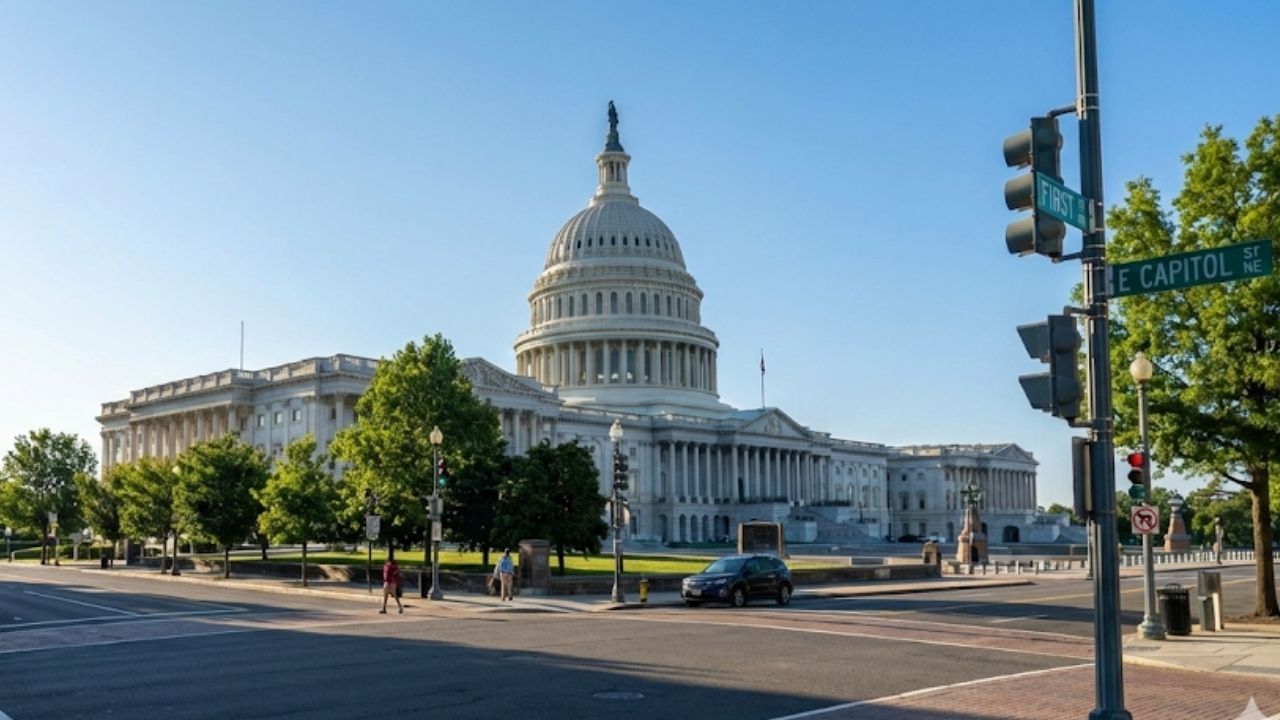
The Congressional Award: A Complete Guide to the Highest Honor for American Youth Bestowed by the U.S. Congress
Hello,
Today, I would like to provide a thorough and detailed explanation of the Congressional Award, a program that has drawn significant interest from many parents.
What Is the Congressional Award?
The Congressional Award is an official civilian honor presented by the United States Congress to young people. Simply put, it is a prestigious national recognition through which members of Congress acknowledge and affirm a student’s dedication, perseverance, and personal growth.
This program was established on November 16, 1979, through legislation signed into law by President Jimmy Carter (Public Law 96-114). It was jointly introduced by Senator Malcolm Wallop of Wyoming and Representative James Howard of New Jersey and received bipartisan support from both Democrats and Republicans. This bipartisan foundation reflects the program’s core value: recognizing youth achievement regardless of political ideology.
How Is the Congressional Award Different from Other Honors?
The most distinctive feature of the Congressional Award is that it is not competitive.
In most awards or competitions, students must outperform others to earn recognition—placing first in a piano competition or ranking higher than peers in a math contest. The Congressional Award operates on an entirely different philosophy.
A helpful analogy is a marathon. In a marathon, runners do not need to finish first to receive a medal—anyone who completes the race earns recognition. Likewise, the Congressional Award is not about comparison. It is about setting personal goals and following through on them.
For example, if a student sets a goal of completing 100 hours of volunteer service and fulfills that commitment, they earn recognition—regardless of how many hours others complete. The focus is on honoring commitment, integrity, and personal accountability.
Who Is Eligible to Participate?
This is one of the most frequently asked questions.
Students may register for the Congressional Award beginning at age 13½, and they may actively participate from age 14 until their 24th birthday.
Most importantly:
U.S. citizenship or permanent residency is NOT required.
Any young person between the ages of 14 and 24 who is legally residing in the United States is eligible to participate. This includes students holding F-1 visas or those living in the U.S. under their parents’ employment visas.
This inclusivity reflects Congress’s intent to recognize and encourage the efforts of all youth growing up and contributing within the United States.
There are no academic requirements, no GPA minimums, no talent prerequisites, and no income restrictions. Motivation and commitment are the only requirements.
Registration Fee
The registration fee is $25, paid once. After registering, participants may continue working toward awards until age 24 without additional fees. There are no extra charges for certificates or medals.
For students facing financial hardship—such as those eligible for Free or Reduced Lunch—a fee waiver is available. This ensures equitable access for all participants.
The Four Program Areas (The “Four Pillars”)
To earn the Congressional Award, participants must complete activities in four distinct areas, known as the Four Pillars. Together, they represent balanced personal growth.
1. Voluntary Public Service
Unpaid service that benefits others or the community.
Examples include:
- Tutoring younger students at a library
- Volunteering at an animal shelter
- Assisting at food banks
- Visiting seniors in nursing homes
- Participating in environmental cleanups
- Supporting patients in hospitals
Volunteer service is categorized as direct or indirect:
- Direct service involves face-to-face interaction (e.g., working directly with people or animals).
- Indirect service includes organizing drives, planning fundraisers, or coordinating campaigns.
For medal-level awards, at least 75% of service hours must be direct, with indirect service limited to 25%. This requirement ensures meaningful community engagement.
School-required service hours may count, though the program encourages deeper involvement beyond minimum requirements.
2. Personal Development
Activities that build new skills or enhance existing ones outside of school coursework.
Examples include:
- Learning musical instruments
- Art, photography, or creative writing
- Coding and programming
- Learning foreign languages
- Cooking or culinary skills
- Leadership training
- Robotics or independent science projects
Important rules:
- Activities cannot be for academic credit.
- Personal Development cannot overlap with Physical Fitness.
The program values learning driven by curiosity, not obligation.
3. Physical Fitness
Consistent physical activity aimed at improving personal health and endurance.
Examples include:
- Running or jogging
- Swimming
- Cycling
- Yoga or Pilates
- Strength training
- Team sports
- Martial arts
- Ice sports or dance
Goals must focus on personal improvement, not competition outcomes. School physical education classes do not qualify.
Each calendar month counts as one month, regardless of how many different activities are performed.
4. Expedition / Exploration
A self-planned experience designed to broaden perspective and build independence.
Two types:
- Expedition (outdoor adventures such as hiking, camping, kayaking)
- Exploration (cultural, historical, or social immersion)
Key rule: Participants must plan the experience themselves.
School trips, family vacations, or pre-organized camps do not qualify.
For medal levels, overnight trips are required. Virtual expeditions are permitted for military-connected youth or those with physical limitations.
Award Levels
The Congressional Award includes six levels:
Certificates
- Bronze Certificate
- Silver Certificate
- Gold Certificate
Medals
- Bronze Medal
- Silver Medal
- Gold Medal
All hours accumulate across levels—no need to start over.
Mentor System
Two adults support each participant:
- Advisor: Oversees goals and progress (not a parent or relative).
- Validator: Confirms completion of specific activities.
This dual-verification system ensures credibility and integrity.
Record Keeping
All submissions are completed digitally through Submittable. Review times range from 4–6 weeks for lower levels to 6–8 weeks for Gold Medal submissions.
Participants reflect not only on what they did, but what they learned and how they grew.
College Admissions Impact
Admissions officers recognize the Congressional Award as a nationally respected, congressionally endorsed honor.
It demonstrates:
- Long-term commitment
- Self-discipline
- Time management
- Leadership
- Self-directed growth
Some universities, such as Mississippi State University, offer scholarships specifically for Congressional Award recipients.
Award Ceremonies
- Gold Medalists attend the National Gold Medal Summit in Washington, D.C.
- Bronze and Silver Medals are typically awarded locally by Members of Congress.
Program Governance and Stability
The Congressional Award Foundation is a 501(c)(3) nonprofit, funded primarily through private donations, ensuring long-term stability regardless of political change.
Final Thoughts
The Congressional Award is not merely an honor—it is a journey of growth.
Over the course of two or more years, participants learn service, discipline, resilience, and independence. These qualities shape not only college applications, but character and lifelong success.
If you want your child to develop sustained commitment, leadership, and purpose, the Congressional Award is one of the most meaningful opportunities available.
Please feel free to contact us with any questions.
Thank you.
For college admissions and financial guidance inquiries:
http://www.eliteprep.com/contact-us
Tel: 470-253-1004
Andy Lee
Elite Prep Suwanee | Powered by Elite Open School
1291 Old Peachtree Rd, NW #127
Suwanee, GA 30024
470-253-1004
andy.lee@eliteprep.com
http://eliteprep.com/suwanee
https://elite4usa.com/Elite_Prep_Suwanee_Website/homepage.html
http://www.youtube.com/@andyssamTV